



A Saturday Morning Crisis
To understand why Scooby-Doo seemed like such a bad idea, you have to picture Saturday morning television in 1968. The airwaves were dominated by action-packed superhero cartoons like 'Space Ghost' and 'The Herculoids'. But parent groups, most notably
Action for Children's Television, were in revolt, protesting what they saw as an endless parade of violence. Under pressure, networks began canceling their biggest hits. Hanna-Barbera, the animation powerhouse behind many of these shows, found itself in a bind. It needed a new, less-violent hit, and fast. Fred Silverman, the head of children's programming at CBS, pitched an idea: a show about a group of teenagers who solve mysteries, maybe in a band like the popular Archie characters. It sounded simple enough, but the first draft was a disaster.
Too Scary and Too Strange
The initial concept, from writers Joe Ruby and Ken Spears, was originally titled 'Mysteries Five' and then 'W-Who's S-S-Scared?'. It was presented as a straightforward mystery show, but CBS executives balked, worrying the spooky houses and ghostly themes were far too frightening for young children. This was precisely the kind of content parent groups were fighting against. Beyond the scares, they felt the human characters were dull. The dog, at this point an early concept for a sheepdog named "Too Much" who played the bongos, was seen as a throwaway gag. The pitch was rejected. The show seemed dead on arrival, a concept caught between being too scary for kids and too bland for anyone else. It needed a complete overhaul to have any chance of seeing the light of day.
Finding the Secret Formula
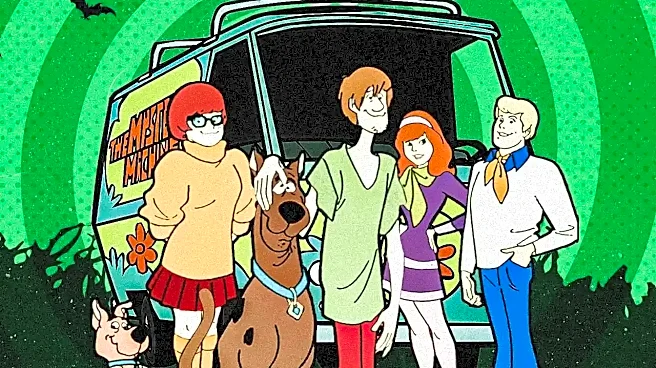
The creative team went back to the drawing board. They knew they needed to inject more comedy to balance out the scares. The solution was to pivot the focus squarely onto the goofy, cowardly duo of Shaggy and his dog. The show's anchor wouldn't be the mystery; it would be the friendship and the food-fueled fear. A key piece of inspiration came from the 1950s sitcom 'The Many Loves of Dobie Gillis'. The four teen archetypes were directly modeled on its cast: Fred, the handsome leader (Dobie); Daphne, the danger-prone beauty (Thalia); Velma, the unsung brainiac (Zelda); and Shaggy, the beatnik slacker (Maynard G. Krebs). This grounded the characters in a familiar, proven dynamic. Then came the masterstroke from legendary animator Iwao Takamoto. Tasked with designing the dog, he spoke with a Great Dane breeder and then deliberately broke all the rules, giving Scooby a goofy chin, a slumped back, and perpetually bowed legs—the opposite of a prize-winning canine. He wasn't just a dog; he was a character full of flawed, lovable personality.
The Monster Was Always a Man
With the comedy and characters locked in, the final piece of the puzzle solved the network's biggest fear: that the show was too scary. The creators established the franchise's most enduring rule—the monster is never real. At the end of every episode, the ghost, ghoul, or creature would be unmasked to reveal a very human culprit, usually motivated by greed. This twist did more than just wrap up the plot. It transformed the show from a horror series into a reassuring lesson in critical thinking. The message to kids was clear: the world might seem scary, but with a little logic and teamwork, the things that go bump in the night are usually just people in masks. This simple, repeatable formula demystified the supernatural and empowered its young audience, giving them a sense of control and understanding that network executives completely underestimated.
A Legacy No One Saw Coming
Renamed 'Scooby-Doo, Where Are You!' after Fred Silverman was inspired by the 'doo-be-doo-be-doo' scat in Frank Sinatra's "Strangers in the Night," the reworked show premiered in 1969 and was an immediate, massive success. It turned out that a show about four archetypal teens and their talking dog was the perfect formula. It had just enough spookiness to be thrilling, enough comedy to be hilarious, and a comforting, predictable conclusion that made it feel safe. It appealed to kids, teens, and even their parents who recognized the 'Dobie Gillis' character types. The show defied every demographic projection, becoming the longest-running animated franchise in U.S. history and a cultural touchstone that has lasted for more than 50 years through countless spin-offs, movies, and merchandise.