




Jeff Goldblum has built a career on irresistible, offbeat charm. But in the new 'Wicked' film, that familiar charisma is twisted into something new and unsettling, giving us a Wizard of Oz whose danger lies in just how much you want to like him.
The Goldblum Blueprint
When you
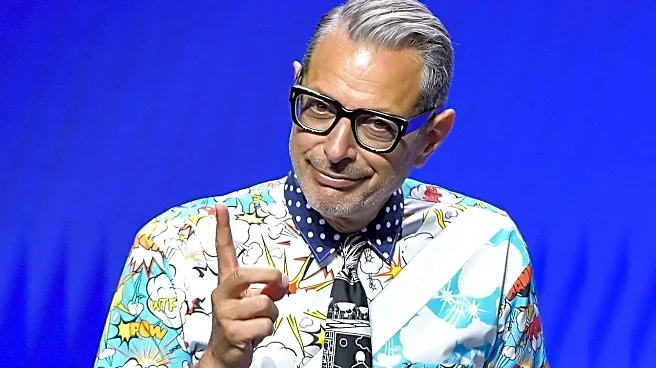
cast Jeff Goldblum, you’re not just hiring an actor; you’re importing a beloved cultural institution. The hesitations, the jazzy, meandering speech patterns, the knowing half-smile—it’s a persona so refined it’s practically a brand. We’ve seen him as the cynical but heroic Dr. Ian Malcolm, the quirky David Levinson, and the delightfully eccentric Grandmaster. Audiences are conditioned to adore him, to see his eccentricities as a sign of intellectual and moral superiority. He is, for lack of a better word, Goldblum-esque. It’s this very expectation that director Jon M. Chu’s 'Wicked' films weaponize. Instead of asking Goldblum to suppress his signature style, the film leans into it, making his portrayal of the Wonderful Wizard of Oz feel both completely natural and deeply insidious.
More Politician Than Showman
The Wizard in the story of 'Wicked' is not the bumbling man-behind-the-curtain from the 1939 classic. He is a far more complex figure: a fraud, yes, but also a masterful politician. He arrived in Oz with no real power and built an empire on spectacle and propaganda. To do so, he needed to be more than just intimidating; he needed to be persuasive, alluring, and, above all, charming. He consolidates power by scapegoating a minority—the talking Animals—and convincing the public that he is their benevolent protector. This requires a leader people want to believe in. Goldblum’s performance captures this perfectly. He portrays the Wizard not as a cartoon villain but as a populist leader who genuinely believes his deceptions are for the greater good. His charm isn't just a facade; it's his primary tool of control, making the citizens of Oz feel special and included in his project, even as he strips their society of its soul.
Weaponizing 'Wonderful'
Nowhere is this dynamic clearer than in the musical number 'Wonderful.' In the song, the Wizard attempts to persuade Elphaba to join his regime, essentially offering her a PR makeover. He sings, 'They call me wonderful, so I am wonderful,' a lyric that perfectly encapsulates his political philosophy: truth is whatever the public believes it to be. Goldblum’s rendition of the song is a masterclass in manipulative charm. He’s not just singing; he's seducing Elphaba—and the audience—with the promise of acceptance and power. He glides through the scene, his movements fluid and his delivery sparkling with that signature Goldblum magic, all while trying to corrupt the story’s hero. The scene is designed to be dazzling, a 'Disneyland ride' of an experience, making the viewer understand how tempting it would be to give in, even when you know it's wrong. It's a performance that makes the Wizard's evil feel banal, a man convincing himself he’s doing the right thing through sheer force of personality.
The Danger in the Dazzle
By casting Goldblum and letting him be Goldblum, 'Wicked' makes a profound statement about the nature of power. The most dangerous authoritarians aren’t always the ones who rule by fear alone; they are often the ones who rule by seduction. They convince the public that their lies are more comforting than the messy truth. Goldblum's Wizard is terrifying precisely because he feels so familiar and trustworthy. He’s the cool professor, the funny talk-show guest, the guy you’d love to have a conversation with. But beneath that veneer is a 'cold-blooded' and 'selfish' individual who uses that likability to enact cruel policies and turn an entire nation against a young woman fighting for justice. The performance forces the audience to confront a difficult reality: charm can be a mask for manipulation, and the leaders who seem most 'Wonderful' are sometimes the ones we should trust the least.