







The Peacock Parade Paradox
First, let's set the scene. Pitti Uomo is the most important menswear trade show on the planet. For a few days every January and June, the stone courtyards of the Fortezza da Basso in Florence, Italy, become a real-world runway. You see sartorial legends,
buyers, editors, and influencers—collectively known as the “Pitti Peacocks”—showcasing the absolute peak of men’s tailoring. The photography from this event sets trends for years. You’d expect to see nothing but razor-sharp creases and immaculate, perfectly pressed garments. And you do. But look closer at the men who are consistently hailed as the most stylish. Their linen blazers have a few gentle crinkles. Their shirt collars are casually unbuttoned. Their trousers have the faintest hint of a wrinkle at the knee. It’s not sloppy; it’s something else entirely. It’s intentional.
The Secret is Sprezzatura
The aesthetic has a name, and it’s a concept central to Italian style: *sprezzatura*. Coined in the 16th century by Baldassare Castiglione in *The Book of the Courtier*, it translates loosely to “studied carelessness.” It’s the art of concealing the effort that goes into achieving something, making the result appear effortless and natural. In Castiglione's day, it was about a nobleman knowing how to dance or wield a sword with an air of nonchalant grace. Today, in the world of menswear, it’s about looking like you just threw on an amazing outfit without a second thought—even if you spent an hour curating it. A perfectly pressed, stiff-as-a-board suit screams effort. It says, “I tried very, very hard to look this way.” A slightly rumpled suit, on the other hand, suggests confidence. It says, “I know the rules of style so well that I can afford to break them a little.” It’s the sartorial equivalent of a confident smirk.
Fabric and Construction Are Key
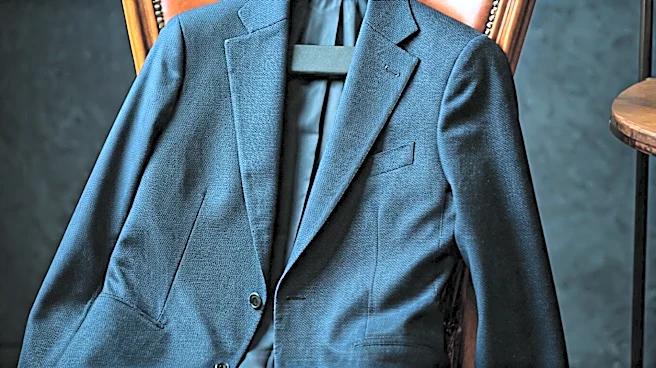
This look isn’t achieved by simply pulling a crumpled suit out of a hamper. The magic lies in choosing garments that are *designed* to look good with a bit of wear. The heroes of Pitti Uomo’s rumpled elegance are fabrics like linen, cotton, and lightweight wool-silk-linen blends. These textiles have a natural texture and are meant to crease and soften with the wearer. They tell the story of a day spent walking through Florence, grabbing an espresso, and living life. The construction of the suit is just as important. Many of the most admired jackets are unlined or feature a soft, unpadded “Neapolitan” shoulder. This construction removes the rigid armor of traditional business suits, allowing the garment to drape naturally and move with the body. It’s a suit that wears more like a comfortable cardigan than a piece of corporate uniform, making those gentle rumples a feature, not a flaw.
It’s a Mindset, Not Just a Wrinkle
Ultimately, the appeal of the rumpled suit is about projecting ease and personality over stiff formality. A man in a perfect, rigid suit can look like he’s wearing a costume or is on his way to a job he hates. A man whose clothes have molded to his body and carry the story of his day looks like he *owns* his style. He’s comfortable in his own skin, and his clothes are an extension of that. The rumpled look is a rejection of the idea that style is about sterile perfection. Instead, it argues that true elegance comes from confidence, comfort, and the subtle imperfections that make us human. It’s about the man wearing the suit, not the suit wearing the man.