





Shattering the Setlist Monotony
Let's be honest: major music festivals can feel formulaic. The multi-artist, rapid-fire format, especially for a radio-branded event, encourages artists to deliver a condensed greatest-hits package. It’s a safe, effective way to please a diverse crowd.
But it’s also incredibly predictable. A deep cut—that beloved, non-single album track—is a jolt to the system. It’s a moment of genuine surprise in a carefully curated corporate event. When an artist like Muse, slated to play this year, swaps out a radio staple for a raw, early-career track, the energy in the arena shifts. The casual listeners might be momentarily confused, but the real fans are electrified. That shared gasp of, “I can’t believe they’re playing this,” is a more powerful and enduring memory than hearing a song you already hear on the radio ten times a day.
A Reward for the True Fans
A blockbuster festival audience is a mix of casual fans and die-hards. The hits are for the former, but the deep cuts are a powerful acknowledgment of the latter. Think of this year's lineup: Kenny Chesney has a massive catalog beyond his radio smashes, and the same goes for rock acts like the Goo Goo Dolls and Weezer. Playing a song that only the dedicated followers would recognize is a validation of their loyalty. These are the fans who buy the whole album, not just the single; who watch the interviews; and who create a community around the artist. In an era where direct artist-to-fan connection is everything, a deep cut is a currency of appreciation. It tells the faithful, “I see you. This one’s for you.” That gesture builds a bond that outlasts any single chart cycle and fosters a fanbase that feels genuinely valued.
The Ultimate Legacy Play
An artist's legacy isn’t just their peak chart position. It's their entire body of work. For a global phenomenon like BTS, also on this year's bill, a setlist that balances mega-hits with a more introspective or experimental track re-frames their narrative for a mainstream audience. It demonstrates artistic depth and reminds people they are more than just a hit-making machine. Playing a deep cut on a massive stage like iHeartRadio’s is an act of confidence. It asserts that all of their music is worthy of a stadium audience, not just the tracks pre-approved by radio programmers. For legacy acts like Snoop Dogg or The Smashing Pumpkins, it can reintroduce a forgotten corner of their catalog to a new generation, proving their enduring relevance and complexity. It’s a power move that says more about an artist’s long-term vision than another flawless, but forgettable, run-through of their biggest song.
But What About the Casual Viewer?
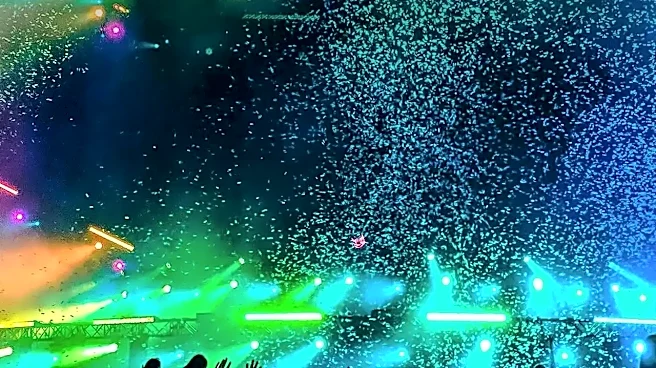
The primary argument against the deep cut is the risk of losing the room. In a venue like T-Mobile Arena, filled with people who might only know Cardi B from her biggest features, an obscure track could theoretically be a momentum killer. But this underestimates both the audience and the power of a great performance. A truly compelling artist can sell any song, familiar or not. The energy, the stage presence, and the raw emotion of a live performance often transcend lyrical familiarity. A surprising song choice can become a viral moment precisely because it was unexpected, prompting new listeners to ask, “What was that song?” and seek it out later. The risk isn't in playing an unknown song; the real risk is in being completely forgettable. In a two-day festival packed with stars, the artist who takes a chance is the one who will be remembered long after the confetti is swept away.