






The Uncomfortable Truth of Toy Story 4
Let’s be honest: for many fans, Toy Story 4, while beautifully animated and emotionally potent in moments, felt like an unnecessary epilogue. Toy Story 3 provided a perfect, gut-wrenching conclusion to Andy’s saga, passing the torch—and the toys—to a new
generation in the form of a little girl named Bonnie. It was a story about graceful endings and the continuation of love. Then, Toy Story 4 arrived and did something jarring: it made Bonnie a passive, almost careless custodian of that legacy. She didn’t just favor Jessie over Woody; she forgot Woody existed. He, the hero of three films, was relegated to collecting dust bunnies in a closet. The film used this neglect as a catalyst for Woody's existential crisis, but it never truly grappled with the implications for Bonnie herself. Her role was reduced to that of a plot device, leaving her character arc feeling incomplete and, frankly, a little unsatisfying.
Bonnie as the Anti-Andy
The franchise has always revolved around a child’s love, but it has almost exclusively portrayed an idealized version of it through Andy. Andy’s love was steadfast. When he outgrew his toys, his emotional struggle was the centerpiece of the film, culminating in a poignant, deliberate act of letting go. He ensured his beloved friends would be cherished anew. Bonnie represents a different, more chaotic, and perhaps more honest, version of childhood affection. Her love is fickle. It burns bright and then, just as quickly, it fades. She didn't mean to hurt Woody; she just... moved on. This isn't villainy; it's the unfiltered, unintentionally cruel reality of being a kid. Andy’s story is a nostalgic farewell. Bonnie’s is a complicated, unresolved examination of what it means to be the toy that gets left behind not once, but twice. That contrast is where the real narrative tension for a fifth movie lies.
What a Necessary Sequel Looks Like
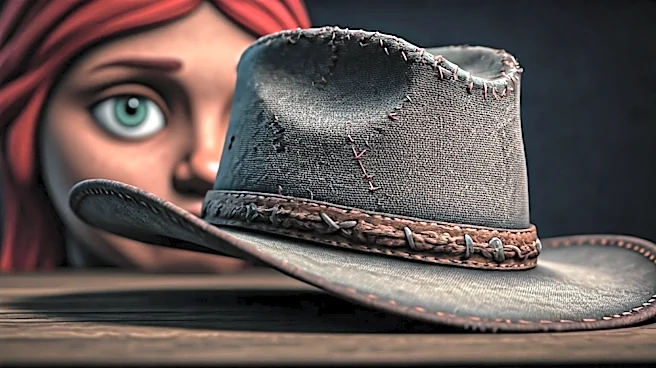
A “necessary” Toy Story 5 wouldn’t just be a reunion tour. It would be a story that dares to explore this darker, more complex theme. Imagine a pre-teen or teenage Bonnie stumbling upon a photo or an old home video. A flash of memory hits her: Where is that cowboy doll? The one she loved so much she wrote her name on his boot? The film could explore the emotional fallout from her perspective. Does she feel a pang of guilt? A sense of loss? This angle transforms her from a simple plot point into a fully realized character grappling with memory and regret. It would be a story about a different kind of growing up—not just moving past your toys, but reconciling with the person you used to be and the casual carelessness of youth. This allows Woody’s journey to come full circle, not by finding a new kid, but by seeing his old one understand the depth of their bond, even after it was broken.
A Story for Today, Not Yesterday
By focusing on Bonnie, Pixar has the chance to do more than simply cash in on nostalgia. They can tell a story that resonates with a modern understanding of emotional complexity. Andy’s arc was a perfect send-off for the millennial generation that grew up with him. Bonnie’s potential arc speaks to a world that is less about perfect endings and more about navigating messy, unfinished business. It would re-center the franchise on the emotional world of a child, something Toy Story 4 moved away from by focusing almost exclusively on the toys' perspectives. A story about Bonnie rediscovering her connection to Woody—or at least, the memory of him—isn't just a rehash. It's a mature, challenging, and emotionally resonant idea that justifies returning to this world one more time.