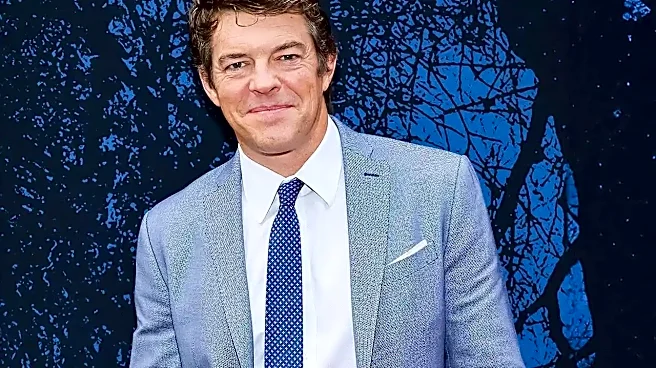








In Hollywood, bigger is usually better. But producer Jason Blum revived the iconic 'Halloween' franchise by thinking small. His counterintuitive model for making movies didn't just bring Michael Myers back; it redefined horror success.
The Blumhouse Blueprint
Jason Blum is not
your typical Hollywood mogul, and his company, Blumhouse Productions, doesn't play by the usual rules. While major studios gamble hundreds of millions on a single blockbuster, Blumhouse built an empire on a simple, radical idea: make movies cheap. The core of the model is keeping production budgets incredibly low, often under $5 million. By minimizing financial risk, the company can afford to make more films and take chances on unconventional ideas. To keep costs down, the blueprint calls for fewer speaking roles, limited locations, and minimal special effects. The real genius, however, is in the deal-making. Instead of large upfront salaries, directors and stars are offered minimum pay in exchange for a significant share of the profits on the back end. This incentivizes everyone to make the best possible film, as a box office hit means everybody gets rich. It also grants filmmakers immense creative freedom, a rarity in the studio system.
Resurrecting a Horror Icon
By the mid-2010s, the 'Halloween' franchise was creatively exhausted. After a series of convoluted sequels and a poorly received reboot duology from director Rob Zombie, Michael Myers was effectively on ice. When Blumhouse acquired the rights, they applied their signature model. They brought back original director John Carpenter as a producer and composer and, most importantly, convinced Jamie Lee Curtis to return as Laurie Strode. Their big creative swing was to erase decades of messy continuity, making their 2018 'Halloween' a direct sequel to the 1978 original. This move stripped away the infamous plot point that Laurie was Michael's sister, returning the killer to his roots as a terrifying, unknowable force of nature. The film was made for a lean $10 million, a budget slightly higher than a typical Blumhouse project but microscopic for a major franchise revival.
A Terrifyingly Profitable Return
The results of this experiment were nothing short of phenomenal. 'Halloween' (2018) debuted to a staggering $76.2 million in its opening weekend, instantly becoming the highest-grossing film in the entire franchise. It went on to earn over $259 million worldwide. On a $10 million budget, the return on investment was astronomical, with a calculated net profit of around $128.5 million. It became the highest-grossing slasher film of all time, proving the Blumhouse model could work wonders even on established, high-profile properties. The film's success was a perfect storm of nostalgia, smart creative decisions, and, most critically, a financial structure that made it wildly profitable before the first ticket was even sold.
The Law of Diminishing Returns?
The model's influence also shaped the rest of the trilogy, with mixed results. The sequels, 'Halloween Kills' (2021) and 'Halloween Ends' (2022), were also financially successful, produced on modest budgets of $20 million and around $30 million, respectively. Combined, the trilogy grossed nearly half a billion dollars. However, their critical and fan receptions were far more divisive. 'Kills' was criticized by some for its repetitive violence, while 'Ends' baffled many with its creative risks, including sidelining Michael Myers for much of the runtime. This highlights the trade-off inherent in the Blumhouse model. The focus on director freedom and profitability can lead to bold, interesting films, but it doesn't always guarantee a universally beloved product. The declining box office and reception across the trilogy suggest that while the financial model is sound, creative gambles don't always pay off with audiences in the long run.