




Ronaldo Nazário: From Agony to Ecstasy
The stage was set for the 1998 World Cup final in Paris: Brazil, the reigning champions, against France, the hosts. At the center of it all was Ronaldo, the 21-year-old phenom, the best player on the planet. But hours before kickoff, disaster struck.
Ronaldo suffered a convulsive fit in the team hotel. Initially left off the team sheet, he was dramatically reinstated just before the match, but was a shadow of himself on the field. Brazil lost 3-0, and the image of a ghostly, disconnected Ronaldo became a symbol of a national tragedy and one of soccer's greatest mysteries. The years that followed were plagued by catastrophic knee injuries that threatened to end his career. But against all odds, he returned for the 2002 World Cup. This time, there was no mystery, only magic. Ronaldo scored eight goals in the tournament, including both goals in the final against Germany, securing Brazil's fifth title. The man who was a ghost in Paris four years earlier had single-handedly conquered the world. It wasn’t just a victory; it was the completion of one of the greatest comebacks in sports history.
Lionel Messi: The Final Coronation
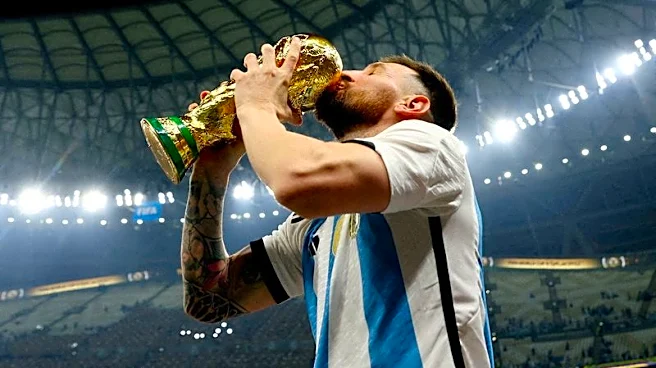
For years, the one shadow looming over Lionel Messi’s claim as the greatest of all time was his lack of a major international trophy with Argentina. The pain was most acute at the 2014 World Cup in Brazil. Messi, at the peak of his powers, dragged his team to the final against Germany. He was awarded the Golden Ball as the tournament's best player, but the one prize he craved was snatched away in extra time. The image of him mournfully walking past the World Cup trophy became iconic of his international heartbreak, which was compounded by consecutive Copa América final losses in the following years. By the 2022 World Cup, at age 35, it was widely seen as his last chance. After a shocking opening-game loss to Saudi Arabia, Argentina's campaign seemed on the brink of collapse. But what followed was a masterclass in leadership and determination. Messi scored, assisted, and willed his team through the knockout stages to a final against France. In one of the most dramatic finals ever, he scored twice, and Argentina triumphed in a penalty shootout. The long-awaited dream was realized, completing his story and cementing his legacy.
Cristiano Ronaldo: The 12-Year Wait
In 2004, a 19-year-old Cristiano Ronaldo was the rising star of a Portuguese “Golden Generation” hosting the European Championship. They were heavy favorites in the final against massive underdog Greece. But in a stunning upset, Portugal lost 1-0 on home soil. The world watched as a teenage Ronaldo wept uncontrollably, the image of his raw despair defining the nation’s heartbreak. For the next 12 years, despite his immense individual success, an international trophy remained elusive. He arrived at Euro 2016 as the undisputed leader but part of a team nobody fancied. Portugal scraped through the group stage and played pragmatic, often uninspiring, soccer. In the final against host nation France, Ronaldo’s personal fairy tale seemed destined for another tragic ending when he was stretchered off with a knee injury in the first half. But what followed was extraordinary. He became a de facto coach on the sideline, passionately urging his teammates on. Portugal won 1-0 in extra time, securing their first-ever major trophy. The tears flowed again, but this time they were tears of pure joy.