

The Weight of Legendary Ghosts
To step onto a stage at the Newport Folk Festival is to perform with ghosts at your back. This is the ground where an 18-year-old Joan Baez made her debut in 1959, her voice cutting through the salty air and launching a career. It’s where Pete Seeger
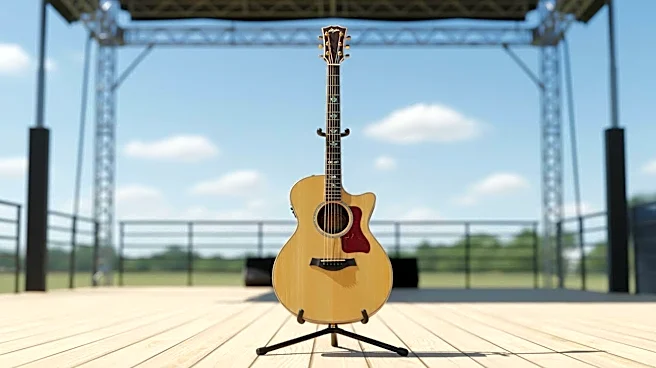
and others locked arms and sang “We Shall Overcome” in 1963, cementing the festival’s role in the Civil Rights Movement. And most famously, it’s where Bob Dylan plugged in his Fender Stratocaster in 1965, sending a shockwave through the folk community that still ripples today. This history creates an impossibly high bar. The audience, a mix of die-hards who have attended for decades and newcomers drawn by the lore, arrives expecting more than just a good set. They expect a moment. It’s a weight that could easily crush an artist, forcing them into safe, reverent performances. But at Newport, something else happens entirely.
Permission to Break the Rules
The festival’s most iconic moment wasn’t an act of conformity; it was a rebellion. Dylan’s electric set was controversial, drawing a mix of cheers and boos from a crowd accustomed to acoustic purity. That act of defiance, now canonized in rock history, became Newport’s strange gift to future generations. It established a precedent that the most memorable thing you can do here is not to perfectly replicate the past, but to challenge its definitions. The very definition of “folk” has been expanding ever since. This creates a unique permission structure. When the ultimate sign of respect is to risk being booed, artists are liberated. The pressure to live up to the legends becomes a license to take chances, to collaborate in unexpected ways, and to redefine what a “folk” performance can be in the first place.
The Modern Ripple Effect
This dynamic is alive and well. The 2026 festival was a perfect example. You had Tom Morello of Rage Against the Machine delivering one of the event's most fiery sets, dedicating a folk-rock cover to his late activist mother. Irish artist CMAT captivated crowds with a performance described as “euro-country,” leaping into the audience and winning over fans who had never heard of her. These genre-bending moments are now the norm, not the exception. The festival’s famous surprise collaborations, like Dave Matthews showing up to close a set with Nathaniel Rateliff, or Hayley Williams bringing out a host of friends, reinforce this spirit. It all builds on the modern legend of Joni Mitchell’s surprise return in 2022, her first full performance in two decades, which reset the bar for what’s possible at Fort Adams. Fans buy tickets before the lineup is even announced, trusting that the curation will deliver these kinds of unrepeatable experiences.
A Conversation, Not a Museum
Ultimately, Newport thrives because it’s not a museum piece. It’s a living conversation between music’s past, present, and future. Artists like Lizzy McAlpine perform new songs inspired by festival legends James Taylor and Joni Mitchell, explicitly connecting their work to the lineage. An R.E.M. cover band can feel perfectly at home, and a hip-hop act like Ms. Lauryn Hill can bring a fresh perspective to the historic space. This is why a sign with a Pete Seeger quote, “We're stronger when we sing together,” still hangs at the entrance. The festival's enduring power comes from this communal, evolving spirit. It’s a place where tradition isn’t a set of rules to be followed, but a foundation upon which to build something new, something challenging, and maybe even something legendary.