







First, What Is Xenia?
Before we dive into Nolan's filmography, let's define the term. Xenia is the ancient Greek concept of guest-friendship, a sacred and moral obligation of hospitality. It dictated that hosts must welcome and protect strangers, offering them food, shelter,
and safety before even asking their name. In return, guests had a duty to be respectful and not burden their host. This wasn't just good manners; it was a divine law, protected by Zeus himself, who was sometimes called Zeus Xenios, the protector of strangers. To violate Xenia—as either a cruel host or a treacherous guest—was to invite divine retribution. It was the invisible contract that allowed society to function in a world where any traveler was at the mercy of strangers. This powerful dynamic of trust, obligation, and trespass is the engine hiding in plain sight in Nolan’s most ambitious films.
The Host's Burden in Gotham
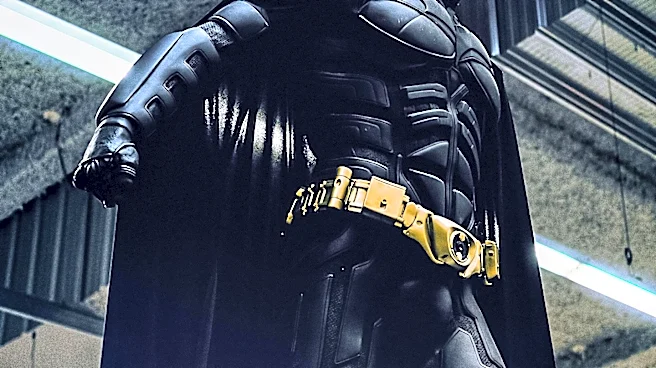
In The Dark Knight Trilogy, Bruce Wayne is, in essence, the self-appointed host of Gotham. He uses his resources to protect its citizens. The Joker, then, is the ultimate transgressive guest. He doesn't just break the rules of the city; he attacks the very foundation of social order and trust that Xenia represents. The ferry scene in The Dark Knight is a perfect Xenia test: two groups of strangers are given the power to destroy the other to save themselves. The Joker’s goal is to prove that when the chips are down, the sacred contract of mutual respect will shatter. Batman's struggle is not just about defeating a villain but about upholding the host's duty to protect his home from a guest who wants to burn it all down, forcing him into impossible moral choices to protect the city's soul.
Inception's Architecture of Trust
Nowhere is the theme of the guest-host relationship more literal than in Inception. Cobb and his team are professional trespassers, uninvited guests who enter the most private home of all: the subconscious. Their entire mission is a violation of the host's sanctity. They must navigate the mind of Robert Fischer, not as respectful visitors, but as manipulators planting a foreign idea. The mind's defenses, Fischer's projections, act as a violent immune system ejecting the unwelcome intruders. The film's tension is built on the precarious trust between the team members—guests in each other's dreams—and the constant threat posed by Cobb's own malevolent mental guest, the projection of his late wife, Mal. She is the ghost of a past betrayal, a guest who refuses to leave and threatens to destroy every new home Cobb enters.
Interstellar's Cosmic Betrayal
Interstellar elevates the guest-host dynamic to a cosmic scale. Cooper and his crew are guests on potentially habitable worlds, relying entirely on the data—the promise of hospitality—left by the Lazarus mission astronauts who came before. The film's most shocking moment is a profound violation of Xenia. Dr. Mann, whose name suggests he represents all of humanity, is discovered to be a false host. He faked his data, luring the crew to his desolate planet not with an offer of shelter, but with a desperate need for rescue. His betrayal is catastrophic: he welcomes his guests only to try and murder them and steal their ship, leaving them to die on his frozen, inhospitable world. It's the ultimate sin in the world of Xenia: a host who becomes a threat to the very guests who put their trust in him, jeopardizing the future of humanity for his own survival.
Oppenheimer's Uninvited Guest
In Oppenheimer, the framework appears in a more abstract, terrifying form. J. Robert Oppenheimer isn't welcoming a person but is instead the host for an idea: the atomic bomb. He invites it into existence, shepherds its development, and unleashes it upon the world. The bomb becomes the uninvited guest in all of civilization, a permanent resident that shatters the world's sense of security. Oppenheimer's tragic arc is his transformation from proud host to a man haunted by the guest he brought into the house. He spends the rest of his life grappling with the consequences of this ultimate violation, trying to establish rules for a guest that has no respect for its host. The chain reaction he feared is the guest running rampant, forever changing the relationship between all nations, turning everyone into a potential hostile host.