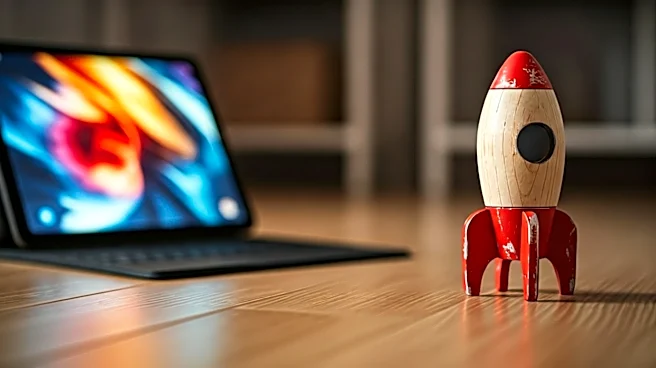










A World Where Toys Mattered Most
When *Toy Story* first arrived in 1995, it landed in a world we instantly recognized. Andy’s bedroom was a sacred universe where imagination was the currency and physical toys were its vessels. Woody, a simple pull-string doll, was a sheriff, a friend,
and a cherished possession. Buzz Lightyear, a piece of molded plastic with buttons and wings, represented the limitless frontier of space. The franchise’s emotional core was built on a simple, powerful premise: a child’s love gives toys life, and their greatest fear is being replaced or forgotten. For nearly three decades, the threat was always another, better toy—a flashy space ranger, a cool cowgirl, a cuddly-but-sinister bear. The drama played out entirely within the analog world of the toy chest.
The Great Digital Disruption
That world feels like a lifetime ago. The central organizing principle of childhood has undergone a seismic shift. Play, once dominated by physical objects and outdoor activities, is now increasingly mediated through screens. The modern kid’s bedroom isn’t just filled with action figures; it’s a networked command center with a tablet, a console, and a smartphone. The competition for a child’s attention is no longer just another toy. It’s an infinite scroll on TikTok, a sprawling world in Minecraft, and a universe of kid-influencers on YouTube unboxing toys that are often more exciting to watch than to own. This isn’t a moral judgment—it’s a fundamental change in the ecosystem of play. The imaginative space that was once the carpet of a child's bedroom has expanded into the boundless, and often overwhelming, digital realm.
Pixar’s New Existential Problem
This presents a profound narrative challenge for *Toy Story 5*. The series has always been about the anxieties of obsolescence. But what happens when the thing making you obsolete isn’t something you can confront, trick, or even befriend? How does a cowboy doll compete with an iPad? The existential dread of a toy gathering dust on a shelf is one thing; the dread of a toy whose entire category of existence is becoming secondary is another. The rules of attachment have changed. A child’s bond with a favorite YouTuber or a customizable gaming avatar can be just as intense, if not more so, than their bond with a stuffed animal. These digital “toys” are always on, constantly updated, and connected to a global community of other players. A pull-string doll feels achingly quiet by comparison. The central conflict of *Toy Story* can no longer be just about a toy’s place in the hierarchy of the bedroom; it has to be about a toy’s place in the world itself.
Where Can Woody and Buzz Go Next?
So, what can Pixar do? Ignoring the digital revolution would feel like a quaint period piece, not a reflection of modern childhood. The most obvious, and perhaps riskiest, path is to confront it head-on. Does the film introduce a “smart toy” with a Wi-Fi connection and a soulless AI, creating a classic man-vs-machine conflict? Or, in a more meta twist, do the toys have to rescue their new kid from the isolating allure of a screen? Perhaps the story could explore the unique value of tangible play in a digital age, arguing that the simple, tactile joy of a physical toy offers something an app never can. It could be a story about rediscovering balance. After all, the franchise has always excelled at turning complex emotional ideas into brilliant adventures. The challenge isn't just to make another movie, but to find a new, resonant truth about what it means to be loved and to have purpose in the 2020s.