




In the annals of horror, few sequels are as notorious as 'Halloween III: Season of the Witch'. Released in 1982, it did the unthinkable: it told a 'Halloween' story with no Michael Myers. This baffling choice was a huge risk that backfired.
An Anthology, Not a Slasher Series
The story of
'Halloween III' begins with the original vision for the franchise. Co-creators John Carpenter and Debra Hill never intended for Michael Myers to become a recurring villain. They saw the first film as a self-contained story about pure, motiveless evil. After being pressured into making a sequel, they definitively killed 'The Shape' in the fiery conclusion of 'Halloween II', intending for that to be the end of his story. Their grand plan was for the 'Halloween' name to represent an anthology series, much like 'The Twilight Zone'. Each year, a new film would tell a completely different scary story centered on the holiday itself, allowing for endless creative possibilities.
A New Story of Ancient Evil
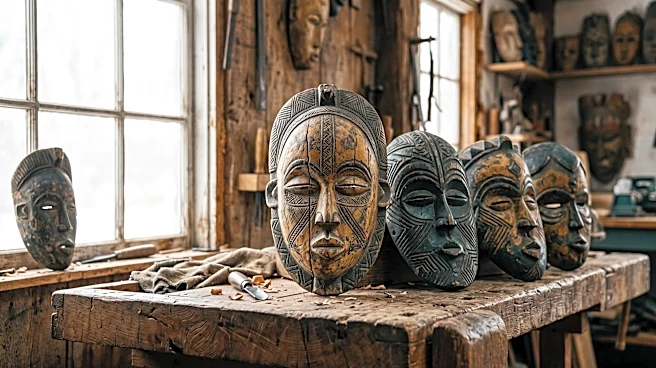
With Michael Myers gone, Carpenter and Hill tapped frequent collaborator Tommy Lee Wallace to write and direct the first entry in this new anthology. The concept they developed was a wild departure from the simple slasher formula. Titled 'Season of the Witch', the story was a bizarre blend of science fiction and ancient paganism. It followed a doctor who uncovers a sinister plot by an evil toy company, Silver Shamrock Novelties. The company's owner plans to use microchips made with fragments of Stonehenge, embedded in Halloween masks, to sacrifice millions of children in a mass ritual triggered by a television commercial. It was a strange, ambitious idea meant to be a 'pod movie' like 'Invasion of the Body Snatchers', focusing on paranoia and conspiracy rather than a guy with a knife.
An Audience Betrayed
The risk did not pay off. When 'Halloween III' hit theaters in October 1982, audiences were confused and angry. The marketing had sold it as another installment in the franchise they knew, but the iconic killer was nowhere to be found. Instead of the familiar suspense of Haddonfield, viewers got a weird tale of druidic curses and killer androids. The film was a commercial disappointment, grossing just $14.4 million, making it the lowest-performing film in the series at the time. Critics were equally harsh, and the backlash was so severe that the studio immediately scrapped the anthology idea. The message from the audience was clear: a 'Halloween' movie without Michael Myers was not a 'Halloween' movie they wanted to see.
Vindication Through Cult Status
For years, 'Season of the Witch' was seen as the black sheep of the franchise, a bizarre misstep to be ignored. But time has been incredibly kind to the film. Divorced from the expectation of seeing Michael Myers, new generations of viewers discovered a uniquely creepy and creative horror movie. Its unsettling synth score, created by Carpenter and Alan Howarth, its chillingly dark ending, and its genuinely weird premise have earned it a massive cult following. Many now celebrate it for its boldness and originality, with some fans even arguing it's one of the best films in the entire series. The very things that made it a failure in 1982—its strange plot and lack of a familiar killer—are now the reasons it is so beloved.