






Diagnosing the Real 'Problem'
Let's be clear: the issue isn't the gender of the hero. The billion-dollar successes of *Captain Marvel* and *Wonder Woman* already debunked that lazy trope. The real affliction plaguing recent films like *The Marvels* and *Madame Web* is a crisis of vision.
These movies weren't just female-led; they were often burdened by clumsy connections to a larger universe, underdeveloped characters, and stories that felt more like obligations than inspirations. Audiences didn't reject women; they rejected movies that seemed to lack a compelling reason to exist beyond filling a slot on a release calendar. The so-called 'problem' is one of quality, confidence, and narrative clarity—a challenge that has felled plenty of male-led superhero films, too.
More Than a 'Female Superman'
On the surface, Supergirl seems like an easy play: take the world’s most recognizable hero and create a female version. But that fundamentally misunderstands what makes Kara Zor-El so compelling. Unlike her cousin, who was sent to Earth as an infant, Kara was a teenager on Krypton. She remembers her home, her parents, and the culture that was violently stolen from her. She isn't an immigrant who assimilated; she's a refugee haunted by a world she can never reclaim. This baked-in tragedy gives her a depth and an edge that Clark Kent, for all his goodness, simply doesn't have. She carries the weight of a dead civilization, making her story inherently one of loss, survival, and finding a purpose in a world that isn't—and can never truly be—her own.
The 'Woman of Tomorrow' Blueprint
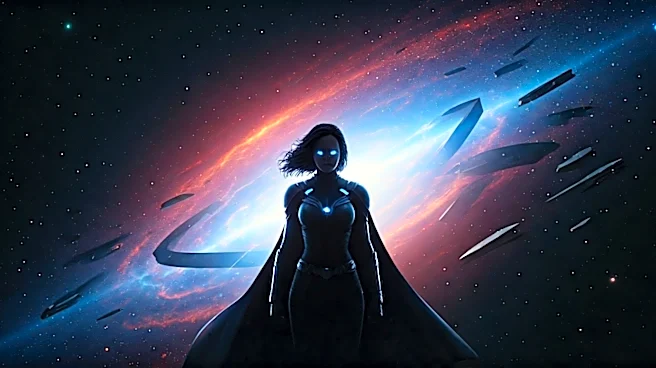
Crucially, new DC chiefs James Gunn and Peter Safran aren't just adapting *any* Supergirl. They’re adapting *Supergirl: Woman of Tomorrow*, the brilliant and universally acclaimed comic series by Tom King and Bilquis Evely. This isn't a sunny high school adventure. It’s a gritty, beautiful, and emotionally raw sci-fi epic that has more in common with *True Grit* than a standard superhero romp. In it, a disillusioned Supergirl, celebrating a lonely 21st birthday in a space bar, is recruited by a young alien girl for a mission of revenge across the galaxy. The story deconstructs her persona, forcing her to confront her anger and trauma head-on. This provides DC with a perfect, ready-made blueprint: a character-driven, visually distinct, and thematically rich story that requires zero prior knowledge of a sprawling universe to appreciate. It’s a film with a powerful, singular vision.
A Foundation, Not an Accessory
For Supergirl to succeed where others have stumbled, DC must treat her not as a supporting player or a team-up component, but as a foundational pillar of its new universe. One of the critical errors of *The Marvels* was that it assumed audiences were deeply invested in a story that felt like a sequel to three different projects. *Supergirl: Woman of Tomorrow* offers the chance for a clean start. By giving her a standalone epic, DC can build audience trust from the ground up, centered on one powerful character and her journey. If the film is as bold, beautiful, and heartbreaking as its source material, it will establish Kara Zor-El as an essential hero in her own right. She won’t be an answer to Superman; she’ll be a heavyweight contender who commands attention on her own terms.