






The Breakup That Started It All
To understand Universal’s gamble, you first have to understand why Christopher Nolan was available in the first place. For nearly two decades, Nolan was a Warner Bros. man, directing modern classics from 'The Dark Knight' trilogy to 'Inception'. But their
relationship fractured in 2020. Warner Bros., rattled by the pandemic, announced it would release its entire 2021 film slate on its HBO Max streaming service the same day they hit theaters. For Nolan, a fierce advocate for the theatrical experience, this was a betrayal. He publicly lambasted the decision, calling the studio disrespectful to filmmakers. The bond built over nearly twenty years was broken, and one of Hollywood’s most bankable directors was suddenly a free agent.
The Billion-Dollar Dowry
Landing Nolan became a Hollywood Hunger Games, and Universal, led by studio chair Donna Langley, came prepared to win. The list of Nolan’s demands for his J. Robert Oppenheimer project was legendary, a testament to the power he wielded. He required a production budget of $100 million, an equal marketing budget of $100 million, and total creative control. More pointedly, he demanded a long and exclusive theatrical window—around 100 to 120 days—a direct repudiation of the streaming-first model that caused his split from Warner Bros. The final, most audacious term: a 'blackout' period, preventing Universal from releasing any other film in the weeks surrounding 'Oppenheimer,' and a staggering 15-20% of the film's first-dollar gross, meaning he would get a cut of the box office before the studio even recouped its costs. Universal said yes to everything.
A Bet on an Unlikely Blockbuster
On paper, the film itself was a tremendous risk in the modern, IP-driven landscape. It was a three-hour, R-rated historical drama about a theoretical physicist, filled with dense dialogue, complex moral quandaries, and long stretches filmed in black and white. In an era where studios chase four-quadrant superhero franchises, Universal was backing a challenging, adult-oriented film. It had no franchise potential, no toy line, and its subject matter was the grim creation of the atomic bomb. Pundits noted that to even turn a profit, given Nolan’s generous deal, the film would need to make at least $400 million globally—a high bar for any drama. Universal wasn’t just betting on a movie; it was betting that Christopher Nolan’s name alone was a bigger brand than any established comic book character.
The Jackpot That Rewrote the Rules
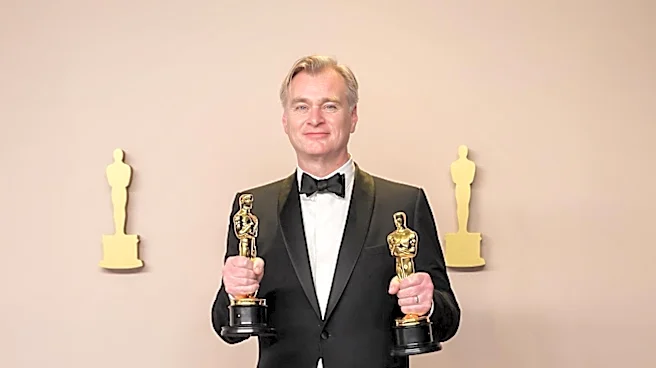
The bet didn't just pay off; it exploded. Fueled by the 'Barbenheimer' cultural phenomenon, critical raves, and Nolan’s reputation, 'Oppenheimer' grossed over $960 million worldwide, becoming the highest-grossing biopic in history. It defied all commercial logic for its genre. The film went on to win seven Academy Awards, including Best Picture and Best Director for Nolan. For Universal, it was a moment of supreme vindication. The studio not only made a fortune but also gained immense prestige, establishing itself as the premier home for auteur filmmakers who want to make ambitious, original films on a grand scale. The success helped propel Universal past Disney as the highest-grossing studio of 2023, a seismic shift in the Hollywood power structure.