





The Shadow of a Modern Icon
When the animated 'Moana' was released in 2016, its songwriter Lin-Manuel Miranda was a Broadway star on the verge of becoming a global phenomenon. His work on 'Moana,' co-written with composer Mark Mancina and Tokelauan musician Opetaia Foaʻi, is not
just a collection of songs; it’s a showcase of his signature lyrical dexterity and rhythmic complexity. Unlike the classic Alan Menken or Sherman Brothers songbooks, Miranda’s music is distinctly modern and inextricably linked to his personal brand. He is a producer on the live-action film and has even penned a new song, but the pressure to match the lightning-in-a-bottle quality of the original soundtrack is immense. The director is Thomas Kail, famous for his work on Miranda's 'Hamilton,' which only tightens the association and raises expectations for a project that must feel both fresh and faithful to a soundtrack that still feels brand new.
More Than Just Catchy Tunes
The music of 'Moana' does more than advance the plot; it builds the world. Songs like "We Know the Way" are deeply rooted in Pacific Islander culture, with lyrics in English, Samoan, and Tokelauan languages. This authenticity was a cornerstone of the original film's success, achieved through the vital collaboration with Opetaia Foaʻi and his band Te Vaka. This isn't just about melody and rhyme; it’s about honoring a culture. Adapting these songs for live-action isn't as simple as having new actors sing them. It requires a delicate touch to preserve the cultural specificity that made them so powerful. The risk of flattening these multi-layered compositions into standard Hollywood musical numbers is high, and audiences who connected with the original's depth will be watching closely. The studio's stated focus on authenticity for the remake suggests they understand this challenge well.
Can Lightning Strike Twice for The Rock?
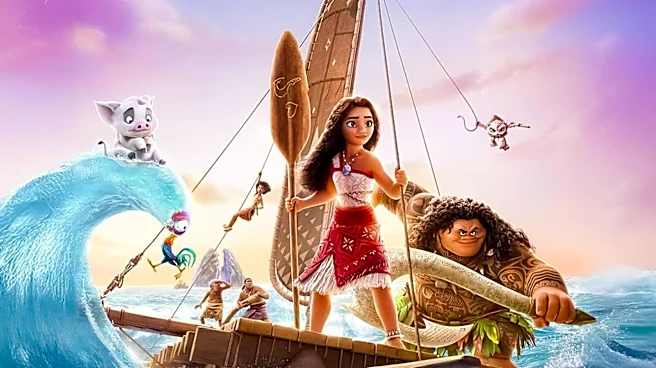
One of the most surprising and delightful elements of the original 'Moana' was Dwayne Johnson's performance as Maui, especially his rendition of "You're Welcome." The song became a viral sensation, a chart-topping hit, and a key part of Johnson's multi-hyphenate persona. He wasn't just voicing a character; he was Maui. Now, Johnson is reprising the role in the flesh, a move that is both a huge selling point and a massive risk. He has to compete with his own iconic, and perhaps unbeatable, animated performance. Johnson himself has admitted that the choreography and timing of singing and acting in live-action is 'a bit more challenging.' Capturing the same blend of charisma, humor, and surprisingly effective vocals that made the animated version a classic is a tall order, even for one of the biggest stars in the world.
A Voice for a Generation Passes the Baton
The original film launched the career of Auliʻi Cravalho, who was just 14 when she was cast. Her voice became synonymous with the character's strength and yearning in the Oscar-nominated anthem "How Far I'll Go." For the live-action version, Cravalho made the deliberate choice not to reprise the role, instead serving as an executive producer to help shepherd the story and pass the baton. The new Moana is Australian actress Catherine Lagaʻaia. While Cravalho has been incredibly supportive, Lagaʻaia faces the daunting task of inheriting a role defined by a universally beloved vocal performance. This isn't like recasting a princess from the 1950s; Cravalho's Moana is a contemporary touchstone for a whole generation of viewers. Lagaʻaia must both honor that legacy and make the character entirely her own, a challenge that will be central to the film's success.