





The Global Party Invitation
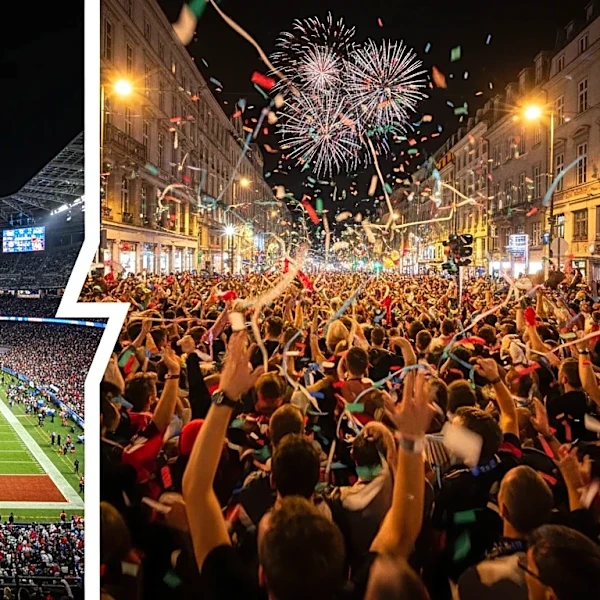
At their core, the most successful cup anthems are engineered for mass appeal. They function as a global invitation to a month-long party, designed to be understood and felt across cultures. The formula often involves a simple, explosive, and relentlessly
catchy chorus that’s easy to sing along to, regardless of your native language. Think of the “Allez, allez, allez” in Ricky Martin’s “La Copa de la Vida” or the call-and-response of “Waka Waka (This Time for Africa).” These hooks are built for stadiums, fan zones, and television broadcasts, creating a shared vocabulary for a global audience. The music itself is often an upbeat blend of pop and dance, energetic enough to soundtrack a goal celebration and universal enough to avoid alienating anyone. It’s a delicate balance of creating something that feels both massive and personal.
A Dash of Local Flavor
While the appeal must be global, the most resonant songs are rarely generic. They incorporate sounds and rhythms from the host nation, giving the tournament a distinct sonic identity. Shakira’s 2010 hit is the prime example; it cleverly sampled a 1986 song by Cameroonian band Golden Sounds, grounding its global pop structure in African musical tradition. This nod to the host continent of Africa made the song feel authentic and celebratory of a specific cultural moment. Similarly, the 1994 USA World Cup anthem, “Gloryland,” leaned into a big American gospel and soul sound. This blend of the global and the local is crucial. It transforms the song from a mere corporate jingle into a cultural artifact of the event, forever linking the music to the place it happened.
The Power of Star Power
FIFA understood early on that attaching a global superstar to the tournament could guarantee an enormous platform. The turning point was arguably Ricky Martin’s “La Copa de la Vida” for the 1998 World Cup in France. Martin was already a Latin music sensation, and the song’s success helped launch the “Latin explosion” in American pop music. A decade later, Shakira, an established global icon, delivered what many consider the crown jewel of World Cup anthems with “Waka Waka.” The artist’s existing popularity ensures the song gets massive airplay and becomes embedded in public consciousness even before the first match kicks off. It’s a symbiotic relationship: the artist lends their global reach to the tournament, and the tournament provides a massive stage that can define a new era of their career.
The Nostalgia Engine
Perhaps the most significant factor is sheer repetition. For one month, the official song is inescapable. It plays during match broadcasts, in highlight reels, on the radio, and in public spaces from bars to grocery stores. This constant exposure ensures the song becomes inextricably linked to the emotional highs and lows of the tournament. When you hear it years later, your brain doesn't just recall a song; it recalls the summer of 2010, the drama of a specific penalty shootout, or the joy of celebrating a goal with friends. Music tied to peak emotional experiences gets encoded with high priority in our brains. The songs aren't just a soundtrack; they become a shorthand for collective memory, a sonic souvenir of a shared global experience.
When the Magic Misfires
Not every anthem sticks the landing. Many tournament songs are forgotten almost as soon as the final whistle blows. Failures often occur when a song feels too generic, too disconnected from the host culture, or simply fails to produce a chant-along chorus. For example, the songs for Brazil 2014 (“We Are One (Ole Ola)”) and Russia 2018 (“Live It Up”) featured huge stars like Jennifer Lopez and Will Smith but made little lasting cultural impact. More recently, FIFA has shifted to releasing multi-song soundtracks, a strategy that risks diluting the chance of a single, unifying anthem emerging. This has left some fans feeling that the newer songs lack the special “World Cup vibe” and fail to generate the same unifying excitement as their predecessors.