



1. Searching for 'The LeBron of Soccer'
Every time a generational talent emerges, the question arises: “Is he the LeBron James or Michael Jordan of soccer?” This comparison falls apart for a few reasons. First, basketball is a game of individual dominance. One superstar can single-handedly
carry a team to a title. In soccer, a squad of 11 players operates in a far more interdependent system. Lionel Messi and Cristiano Ronaldo are titans, but they can’t win without a world-class supporting cast. Furthermore, the “Greatest of All Time” (GOAT) debate in soccer is far more complex. How do you compare Messi, a creative forward, to Pelé, who played in a different era with different rules, or to Franz Beckenbauer, a revolutionary defender? There is no single, all-encompassing statistical measure like a quarterback rating. Influence in soccer is diffuse. Instead of looking for a one-to-one GOAT, it's better to appreciate the distinct genius of players who defined their positions and eras.
2. Demanding a Playoff System
“So, they just play everyone twice and... that’s it?” The American sports calendar is built around the regular season as a prelude to the *real* season: the playoffs. In most of the world’s soccer leagues, the 38-game season *is* the main event. Winning the league title (like the Premier League or La Liga) is considered the ultimate measure of a team’s quality and consistency. There’s no do-or-die, seven-game series; there is a grueling, nine-month marathon where every point matters. This format creates a different kind of drama. The title race can be decided on the final day, while battles at the bottom of the table to avoid relegation—a concept with no mainstream U.S. equivalent—are often just as intense. The league table doesn’t reward a team that gets hot in October; it rewards the best team, period.
3. Dismissing a Draw as a Waste of Time
The old American sports adage, “a tie is like kissing your sister,” simply doesn’t apply in soccer. A draw isn’t a failure; it’s a result with immense strategic value. A hard-fought 0-0 draw away from home against a powerful rival can feel like a victory. Securing that single point might be the difference between winning a league title and finishing second, or between staying in the top division and being relegated. In knockout tournaments with two-legged ties, an away draw can set a team up perfectly for the return match at their home stadium. Far from being an anticlimax, the draw is a fundamental part of soccer's tactical chess match. It forces teams to weigh risk and reward constantly. Sometimes, not losing is the most important way to win.
4. Anointing a 'Quarterback' on the Pitch
It’s tempting to identify a team’s most important player and label them the “quarterback.” But soccer lacks a direct equivalent. An NFL quarterback touches the ball on every single offensive play, making them the undisputed fulcrum of the attack. In soccer, influence is spread out. A deep-lying midfielder like Andrea Pirlo might dictate the tempo of the game without ever sprinting into the box. A dominant center-back like Virgil van Dijk can organize the entire defense and initiate attacks from the back. A creative attacking midfielder (a “number 10”) might be the closest comparison, but even they can be bypassed for long stretches. Leadership and playmaking responsibilities are distributed across the field. Thinking in terms of a single “quarterback” overlooks the complex, systemic nature of a well-drilled soccer team.
5. Calling a Final 'The Super Bowl of Soccer'
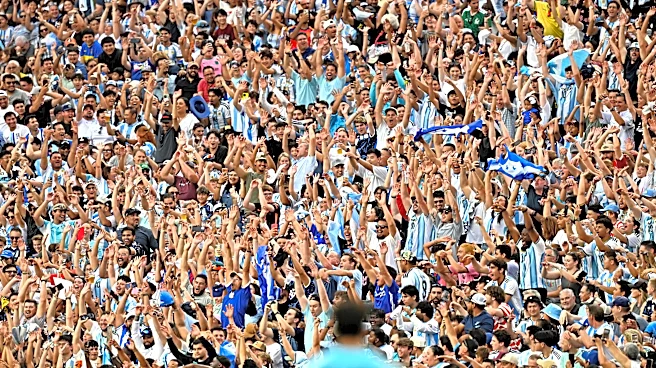
Whether it’s the UEFA Champions League Final or the FIFA World Cup Final, comparing it to the Super Bowl misses the mark on scale and cultural context. The Super Bowl is a uniquely American event—a cultural and commercial behemoth that temporarily unites the nation. The Champions League Final, however, is a continental club competition, pitting the best teams from dozens of countries against each other. It’s more tribal and less about national identity. The World Cup Final is something else entirely. It’s a global event that brings entire nations to a standstill in a way the Super Bowl can’t comprehend. It’s about national pride, history, and a shared global experience that happens only once every four years. While the Super Bowl is the biggest day in American sports, the World Cup Final is arguably the biggest single-sporting event on the planet.