









Let's Talk About the Word 'Investment'
First, let's get one thing straight: for most people, a piece of jewelry is not a financial investment like a stock or real estate. Unless you're dealing in exceptionally rare, high-quality gems or historically significant pieces, you're unlikely to make
a profit. The word "investment" here really means an investment in sentiment, durability, and lasting style. You're putting your money into something you hope to wear for decades and perhaps pass down. So, the question isn't which stone will make you richer, but which one offers the best value for your specific goals.
The Diamond: Tradition and Tangible Value
The diamond's primary appeal is its legacy. It’s the traditional choice, a cultural symbol of permanence and luxury. From a value perspective, diamonds do hold a portion of their worth better than many other gems. While you'll almost always lose money selling a diamond compared to its retail price—often retaining only 40-60% of the initial cost—it has an established and robust resale market. This means that while it's not a money-maker, a high-quality natural diamond does represent a store of tangible value that moissanite currently does not possess in the same way.
The Moissanite: Brilliance and Budget
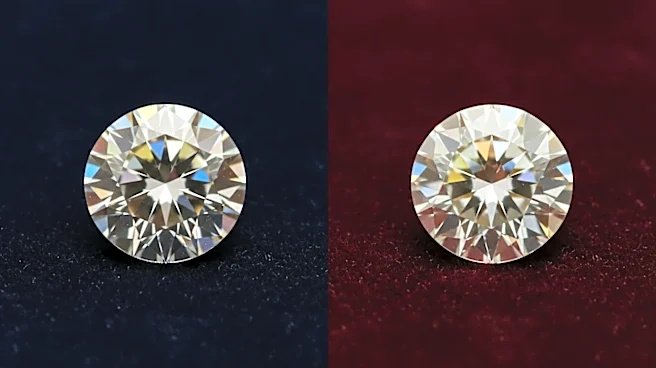
Moissanite is a gemstone made of silicon carbide, first discovered in a meteor crater and now created almost exclusively in labs. This lab-grown origin story is central to its appeal. It’s an ethical, mine-free option with a much smaller environmental footprint. Aesthetically, moissanite is known for its intense fire—the rainbow-colored flashes it gives off. It has a higher refractive index than a diamond, meaning it can appear even more brilliant or sparkly. Its biggest advantage, however, is price. A moissanite stone can cost 80-90% less than a natural diamond of a similar size, allowing for a much larger, more dramatic look for the same budget.
The Hard Truth on Resale Value
This is where the 'investment' conversation gets critical. While a diamond loses a chunk of its value upon resale, moissanite loses nearly all of its monetary value. Because it can be produced in a lab with no rarity constraints, the resale market is small and offers very low returns. One expert bluntly states that moissanite holds essentially no resale value. Therefore, buying moissanite should be seen as a purchase for its aesthetic and personal value alone. The money you save upfront is the entirety of its financial benefit; you are trading long-term asset value for immediate affordability.
The Forever Factor: Durability for Daily Wear
For a piece meant to last a lifetime, hardness matters. Durability is measured on the Mohs scale, and diamond is a perfect 10, making it the hardest known mineral and exceptionally resistant to scratches from daily life. Moissanite scores a 9.25, which is still incredibly hard and durable—harder than other precious gems like sapphires and rubies. It is highly resistant to scratching and chipping, making it perfectly suitable for an everyday ring. While diamond has a slight edge, in practical, real-world terms, both stones are built to last for generations with proper care.