


Not Your Grandfather's Silence
Let's get one thing straight: silent films were never truly silent. From the very beginning, movie houses used live music—a solo pianist, an organist, or even a small orchestra—to flesh out the emotional world on screen and, just as practically, to cover
the clatter of the projector. But the experience at the Telluride Film Festival, a pristine jewel box of an event nestled in the Colorado mountains, elevates this tradition into a breathtaking art form. Here, watching a silent film isn't a quaint historical exercise; it's a vibrant, electric performance. The audience doesn’t just watch a movie; they witness a unique collaboration between a century-old film and a musician performing in real-time, creating a score that exists only in that moment. It’s a powerful reminder that before sound was mechanically bound to image, the combination was a live, theatrical event.
The Maestros of the Moment
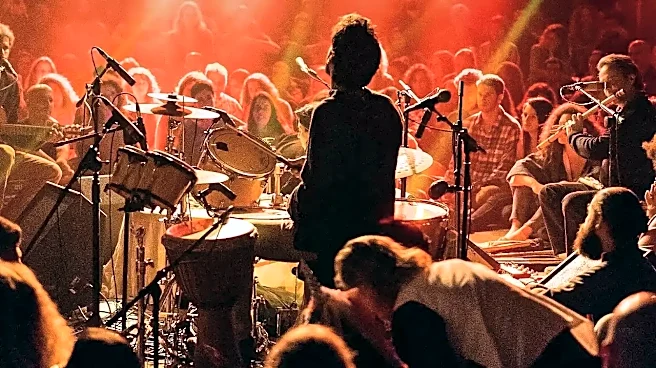
The transformation rests on the shoulders of immensely talented accompanists, figures like Donald Sosin, a world-renowned pianist who is a regular fixture at Telluride and other major festivals. These musicians are not merely playing background music; they are co-narrators, improvisers, and emotional conduits. Sosin, who began his accidental career by playfully improvising over a Laurel and Hardy film in his college dorm, has scored over a thousand films. His approach, like that of his peers, is a delicate dance between preparation and spontaneity. Before a screening, he might identify key themes, characters, and emotional shifts, sometimes developing specific musical motifs for each. But during the performance, he is responding live, watching the actors' faces and the pace of the editing, letting the film guide his fingers. The goal, as one accompanist put it, is to create a score that you both notice and don't notice, one that enhances the drama without calling attention to itself.
The Art of the Live Score
So how does it actually work? It’s a process far more complex than just playing sad music for sad scenes. Accompanists must become intimate with the film's rhythm and soul. They decide when to use a recognizable popular tune of the era for a touch of authenticity, and when to weave in original, improvised melodies to heighten suspense or heartbreak. They match the tempo of their playing to the frantic energy of a chase scene or the subtle grace of a dancer's feet. The chemistry between musician and film is everything. A great accompanist doesn't just score the action; they score the subtext. They find the flicker of doubt in a hero's eyes or the burgeoning romance in a shared glance and translate it into melody. This turns the screening into a three-way conversation between the film, the musician, and the audience, with each performance being unrepeatably unique.
Making the Past Feel Present
The ultimate magic of live accompaniment at Telluride is its ability to dissolve time. A film from the 1920s can suddenly feel as immediate and emotionally resonant as a modern premiere. The live music acts as a bridge, connecting a 21st-century audience to the universal human emotions flickering on the century-old celluloid. It proves that a compelling story, well-told, never truly ages. The experience strips away the artifice of historical distance, making a black-and-white melodrama feel vital or a slapstick comedy genuinely hilarious. It’s an act of resurrection. Telluride has a long tradition of celebrating cinema's past alongside its future, and these screenings are a core part of that mission, creating a context for where film has been and where it's going. In a world of digital perfection and endlessly repeatable content, the silent film screening offers something radically different: a singular, shared experience that can never be replicated.