





The NBA's Obsession with Space
In modern basketball, the concept of “pace and space” is king. For years, teams like the Golden State Warriors under Steve Kerr have dominated not just with superstar talent, but with a system built on a simple principle: use movement to create space,
and use space to create easy shots. When you watch Stephen Curry, it’s tempting to focus on his incredible shooting. But the real genius is often the action happening away from him. A screen from Draymond Green, a cut from Klay Thompson—it’s a coordinated dance designed to pull the defense into a state of confusion. The coach’s job isn’t just to draw up a play for the star; it’s to design an entire offensive ecosystem where every player’s movement has a purpose. The goal is to stretch the defense to its breaking point, creating open lanes and uncontested threes. This philosophy treats the half-court not as a stage for one-on-one duels, but as a geometry problem to be solved.
Soccer's Answer: The Invisible Grid
Now, imagine that same principle applied to a much larger field with 11 players per side. This is the core of a dominant modern soccer philosophy called *Juego de Posición*, or Positional Play. Popularized by managers like Pep Guardiola at clubs like Barcelona, Bayern Munich, and Manchester City, this system is a coach's dream of total control. The field is mentally divided into a grid, and the rules are deceptively simple: players must maintain specific spacing and occupy certain zones to ensure there are always open passing options. No more than a certain number of players can be in the same vertical or horizontal line. The idea is to create superiority in numbers or position all over the field. While it looks like players are freely roaming, they are actually adhering to a strict set of rules about where to be in relation to the ball, their teammates, and the opposition. The ball is moved to find the open man, but the system is what creates that open man in the first place.
The Coach's Blueprint in Action
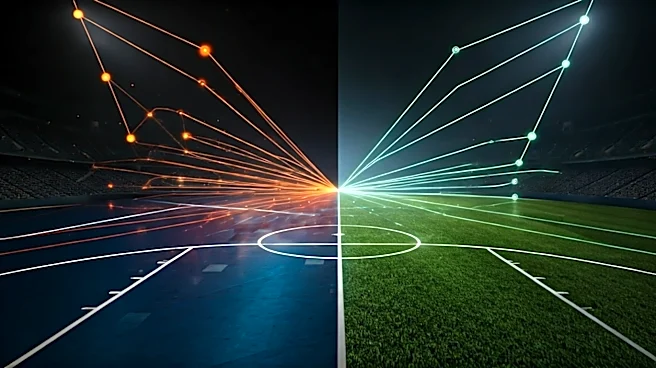
This is the hidden coaching battle. It’s Guardiola vs. Kerr, Klopp vs. Popovich—philosophers who speak the same language of space, just in different dialects. Both systems demand incredible intelligence and discipline from their players. A basketball player who drifts out of position breaks the offensive flow; a soccer player who abandons their zone collapses the structure. The magic happens when the system becomes second nature. A Warriors player making a backdoor cut without the ball is doing the same job as a Manchester City midfielder drifting between defenders to receive a pass. Both are anticipating the flow of play and moving to a spot where the ball *should* be. The battle is one of system versus chaos. The coach’s blueprint is designed to impose order on the inherent randomness of a game, forcing the defense to react and make mistakes. It’s a testament to the idea that a team of intelligent, coordinated players can be far more dangerous than a team of brilliant individuals.
How to Watch Like a Coach
So, how can you, the NBA fan, spot this on the soccer field? Stop watching the ball. For a minute or two, just watch the team’s shape when they have possession. Are the players spread out, using the full width of the field to stretch the defense? Watch the players farthest from the action. Are they standing still, or are they moving to pull a defender away and create a channel for a teammate? That’s the system at work. When a team loses the ball, watch how quickly they swarm to regain their defensive shape. That’s the discipline instilled by the coach. You’ll notice some teams look like a perfectly drilled orchestra, while others seem more like a chaotic jam session. The ones that look like an orchestra are often the ones winning the hidden coaching battle, long before a single shot is taken.