






The Playroom Is Now a Charging Station
The world Woody, Buzz, and the gang have always navigated is one of analog imagination. It’s a world of pull-strings, voice boxes with pre-recorded phrases, and plastic molded into familiar shapes. Their greatest threat was always being replaced by a newer,
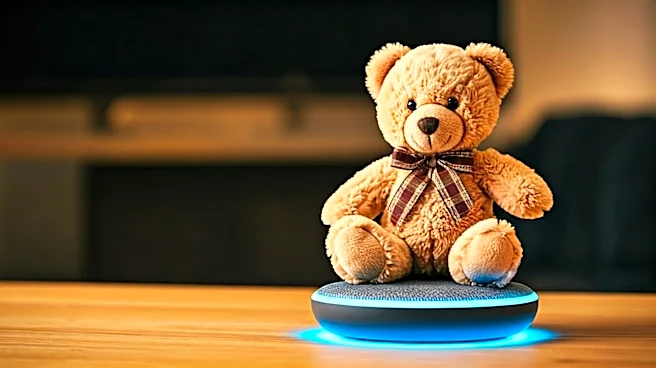
shinier version of themselves—a space ranger, a cowgirl. But the fundamental nature of play remained the same. A child’s hands and mind were the engine. Now, imagine the setting for a potential *Toy Story 5*. The playroom isn’t just a toy chest and a bed. It’s a landscape of glowing screens, smart speakers that answer to a child’s name, and educational tablets that gamify learning. The new “toys” aren’t waiting for a child to animate them; they are actively engaging the child themselves. They have software updates. They are connected to the Wi-Fi. This isn’t just a new rival for Andy’s—or Bonnie’s—affection. It’s a fundamental shift in the definition of play itself, creating a world where traditional toys are not just old, but philosophically obsolete.
From 'I Am Not a Toy' to 'I Am Not a Plaything'
*Toy Story 4* gave us Forky, a spork who declared, “I am not a toy!” because he saw himself as trash, a disposable object. It was a crisis of value. The next evolution of this crisis is far more complex. A modern AI-powered companion or a coding robot wouldn't see itself as trash; it might see itself as superior. Its crisis isn't one of value, but of function. The phrase “I am not a child’s plaything” is a declaration of purpose, not a lack of it. It’s what a smart speaker might think as it streams a bedtime story, or what an educational robot believes as it teaches a child to code. These new arrivals aren’t “playthings” in the way Woody is. They are utilities, tools, and digital nannies. They don’t exist to be vessels for a child’s imagination; they exist to direct it, to educate it, or to entertain it with a stream of content. They are active participants, not passive partners.
Woody’s Purpose in a Post-Plaything World
This presents a devastating existential challenge for Woody. His entire identity, his *raison d'être*, is rooted in being a child’s most beloved plaything. He found peace at the end of *Toy Story 4* not by finding a new owner, but by helping lost toys find kids—perpetuating the very system that the tech era threatens to dismantle. What is the role of a “lost toy” helper when the toys themselves are no longer the point? Woody’s core belief is that a toy’s greatest joy is to be there for their kid. But what happens when “being there” means sitting on a shelf while the kid talks to Alexa? Or when the most cherished object in the room is a tablet that offers a thousand games, none of which require an analog friend? Woody’s struggle would no longer be about staying in the light of a child’s affection, but about proving that his kind of play—imaginative, tactile, and unscripted—still has any value at all.
The New Existential Horror
The horror of the *Toy Story* universe was once Sid’s Frankenstein-like creations or the cold indifference of a daycare run by a bitter teddy bear. The horror of a tech-era *Toy Story 5* is quieter and more insidious: it’s irrelevance. It’s the slow, creeping realization that you are not just forgotten, but that the very game you were designed to play has been canceled. Imagine the conflict. It wouldn’t be Woody versus a cocky new action figure. It would be Woody versus a device that can tell infinite stories, answer any question, and never needs its batteries replaced. How do you compete with a cloud? The line “I am not a child’s plaything” could be a rallying cry for a new generation of smart devices that view traditional toys with contempt, seeing them as primitive, un-networked relics. For them, it’s a statement of superiority. For Woody and Buzz, it’s a eulogy for their entire existence.