






More Than Just a Number
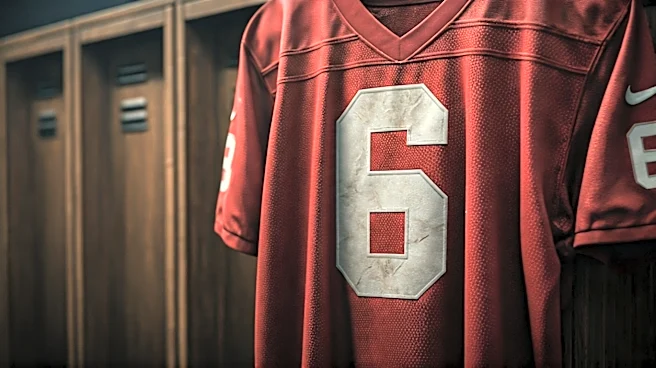
For American sports fans, jersey numbers often signify a position or a legend—Michael Jordan's #23, Wayne Gretzky's #99. In soccer, the #6 worn by Bobby Moore in 1966 represented a specific kind of player: the ball-playing central defender. In an era
often defined by rugged, no-nonsense defending, Moore was different. He was an artist in a bruiser's world. His game wasn't built on raw power but on anticipation, timing, and an almost supernatural ability to read the game two or three moves ahead of everyone else. He didn't just stop attacks; he started them. This was the essence of the man from East London who would become a national hero: calm, composed, and impossibly elegant.
The Weight of a Nation at Wembley
The 1966 FIFA World Cup was held in England, a nation that had invented the modern game but had never won its ultimate prize. The pressure was immense. As captain of the host nation, the 25-year-old Moore carried the hopes of millions on his shoulders. Throughout the tournament, he was a pillar of tranquility in a sea of national anxiety. Manager Alf Ramsey, a man not given to hyperbole, built his entire system around Moore's unique talents. He famously said that without Moore as his captain, England would have no chance of winning. This wasn't just praise; it was a statement of tactical fact. The entire English strategy relied on Moore's composure and distribution from the back.
A Masterclass in the Final
The final against West Germany is the stuff of legend, and Moore's performance is a case study in leadership under fire. When England went down 1-0 early, lesser captains might have panicked. Moore, instead, demanded the ball. Moments later, he took a quick free-kick, lofting a perfect pass onto Geoff Hurst's head for the equalizer. It was a moment of genius born not from frantic energy, but from ice-cold thinking. Then, in the final seconds of extra time with England leading 3-2 and the stadium in a frenzy, any other defender would have blasted the ball into the stands to kill the clock. Moore, spotting Hurst on a breakaway, instead delivered a pinpoint 40-yard pass, setting up the iconic hat-trick goal. Even in victory, he chose precision over panic.
The Icon and The Ultimate Compliment
After the final whistle, the enduring image was created: Moore, hoisted onto his teammates' shoulders, holding the Jules Rimet trophy. Before accepting the trophy from Queen Elizabeth II, he famously wiped his muddy hands on his shorts so as not to soil her white gloves—a small gesture of class that became part of his mythos. But perhaps the greatest tribute came from the man many consider the best ever to play the game. Pelé, the Brazilian superstar, called Moore the greatest defender he ever faced. "He was my friend as well as the greatest defender I ever played against," Pelé said. Coming from an opponent who had faced every legendary defender of his generation, it was the ultimate seal of approval.