



The Illusion of Effortlessness
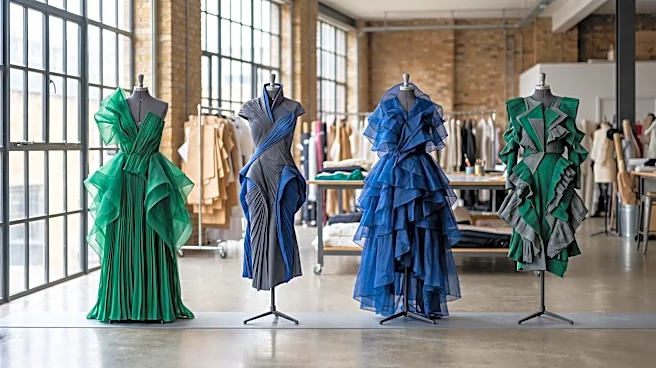
When a gown billows with perfect structure yet looks as light as air, it’s easy to assume the fabric is simply ultra-lightweight. While that’s part of the story, the real artistry lies in the interplay between material science and structural engineering.
Designers who master this effect are essentially architects of cloth, using specific textiles that possess a unique combination of stiffness and low density. This allows them to build volume and create dramatic silhouettes that hold their shape without the weight of heavy underpinnings, corsetry, or multiple layers of crinoline that defined historical formalwear. The goal is to create a moment of visual wonder, where the garment’s form appears to be a natural extension of the wearer, moving with a fluid, almost impossible grace.
A Classic Secret: The Power of Gazar
One of the original ‘quiet choices’ behind this phenomenon is gazar, a fabric with a fascinating history. Developed in a collaboration between couturier Cristóbal Balenciaga and Swiss textile firm Abraham in the late 1950s, silk gazar is a plain-weave fabric with a crisp, smooth finish. What makes it special is its 'springy' quality. It’s woven with high-twist, double yarns that are spaced farther apart than in typical silks like organza. This unique construction gives gazar a sculptural quality; it can be molded into architectural shapes that stand away from the body, creating volume without collapsing. Balenciaga used it to pioneer new silhouettes, like the iconic semi-fitted and balloon dresses that looked structured yet floated around the wearer. It remains a go-to for modern couture houses seeking to create that signature blend of substance and weightlessness.
Modern Marvels: Polymers and Monofilaments
Today’s designers have pushed the boundaries far beyond traditional silks. Visionaries like Iris van Herpen are renowned for their otherworldly creations that seem to breathe and move on their own. The secret here often involves advanced materials and cutting-edge techniques. Van Herpen frequently uses fine silicone, 3D-printed polymers, and intricate laser-cut fabrics to construct garments that are both highly detailed and astonishingly light. Another key material in the modern arsenal is monofilament fabric. As the name suggests, these textiles are woven from single-strand synthetic fibers, like a fishing line. The resulting fabric is often transparent and has a stiff, wiry quality that allows it to be molded into gravity-defying shapes while remaining sheer and delicate in appearance. This technology enables designers to create the illusion of structured water or captured smoke.
The Unseen Art of Engineering
Ultimately, the material is only half the battle. The construction itself is a form of invisible engineering. To achieve a weightless look, designers employ masterful pattern-cutting that distributes what little weight there is across the strongest points of the body, often the shoulders and waist, without any visible strain. Seams are minimized or hidden within folds, and internal support structures are either eliminated or reimagined using lightweight, flexible alternatives to traditional boning. The entire garment is built around the principle of balance and tension. Every dart, pleat, and panel is precisely placed not just for aesthetic reasons, but to contribute to the overall structural integrity, ensuring the dress holds its intended shape while moving as if it’s lighter than air.