

The Rockstar Who Wanted Out
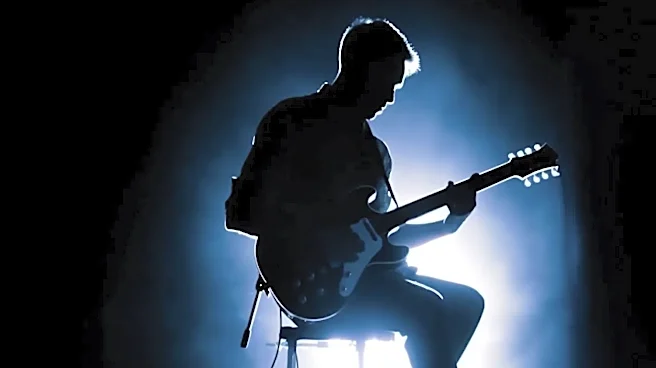
By early 1982, Randy Rhoads was on top of the world. As Ozzy Osbourne’s brilliant lead guitarist, he had co-written and performed on two of the most influential metal albums of all time, 'Blizzard of Ozz' and 'Diary of a Madman.' He was a guitar hero,
an icon whose posters hung on the walls of aspiring musicians everywhere. But behind the screaming crowds and rock-and-roll chaos, Rhoads was growing restless. He was a musician first and a rock star second, and the distinction was wearing on him. While his bandmates often embraced the party lifestyle, Randy would spend his time on the road seeking out classical guitar tutors in different cities, practicing scales and studying music theory. He was famously bored with his own playing, constantly seeking new input to evolve beyond the powerful, but ultimately limiting, box of heavy metal.
The Final Conversation with Ozzy
The friction came to a head in the final weeks of his life. Rhoads had made a decision that was, to his bandleader, almost incomprehensible. He informed Ozzy that once the 'Diary of a Madman' tour was over, he was quitting. He didn’t want to form a new band or chase a different kind of fame. His plan was to enroll at UCLA to formally study and earn a master's degree in classical music. Ozzy was baffled, reportedly telling him, "You could buy your own fucking college by the time you're done if you keep doing this!" But for Randy, it was never about the money or the fame. It was about the music itself. His sister, Kathy Rhoads, confirmed that their mother had already begun the process of getting him enrolled. This wasn't a whim; it was a concrete plan for the next chapter of his life.
A Return to Musical Roots
This desire to pursue pure musicianship was the same impulse that defined his beginnings. Before Ozzy, there was Quiet Riot, the band he formed in the 70s with singer Kevin DuBrow. While they never achieved mainstream success in their initial run, Quiet Riot was Randy's band, born from youthful ambition in the clubs of Los Angeles. His partnership with DuBrow was the creative engine of that era. When Rhoads left to join Ozzy, DuBrow was admittedly hurt but understood the opportunity his friend had. This history makes his final ambition even more poignant. In deciding to leave the global spotlight of Ozzy's band, Randy was, in a sense, returning to the spirit of his origins—focusing on the craft rather than the spectacle. It was a move back toward being a musician in a room, not a guitar god on a stage.
The Unheard Final 'Recording'
This is why searching for a literal "last recording" of Randy Rhoads misses the point. There is no secret, final studio track with a profound message. His last official recordings are the masterpieces on 'Diary of a Madman,' and his final performance was a blistering live show with Ozzy just a day before his death. But his most personal, final musical statement wasn't something committed to tape. It was the decision to dedicate his life to a deeper understanding of his instrument. The "recording" was the unwritten future—the classical compositions he might have written, the new fusion of styles he would have pioneered, and the students he might have taught. It was the sound of an artist choosing his own path, a quiet but powerful declaration of who he wanted to become, away from the demands of the rock machine.