
The Mid-Major Defensive Identity
Great March Madness runs are rarely built on flashy, high-flying offense. They’re forged in the fires of grit and defense. Think of a #12 seed grinding a high-powered #5 seed to a halt with a suffocating
zone or a relentless press. That was Morocco in Qatar. Coached by the tactically brilliant Walid Regragui, they were a defensive masterpiece. Before their semifinal match against France, they had conceded only a single goal in the entire tournament—and that was an own goal. They played with a ferocious, disciplined organization that frustrated and neutralized Europe’s most creative attacking talents. Like a scrappy team from the Colonial Athletic Association making a deep run, Morocco’s identity wasn’t about outscoring opponents; it was about refusing to be scored upon. They made every match a rock fight, and they were the best team in the world at it.
A Bracket-Busting Run of Upsets
A Cinderella isn't a Cinderella without knocking off some giants. Morocco’s path to the semifinals was a masterclass in giant-slaying that would make any March Madness fan nod in appreciation. It started in the group stage, where they topped a group containing world #2 Belgium and 2018 finalist Croatia. That was the equivalent of winning a tough conference tournament. But the knockout rounds were where the real magic happened. First, they faced Spain, the masters of possession football. After 120 minutes of tactical strangulation, the game went to penalties, where Morocco’s goalkeeper, Bono, became a legend. They didn’t just win; they shut out Spain 3-0 in the shootout. Next up was Cristiano Ronaldo’s Portugal. Morocco held firm again, scoring a single, glorious goal and defending it with their lives to become the first African nation ever to reach a World Cup semifinal. This wasn't just one lucky win; it was a sustained, bracket-destroying campaign.
The Star Player with a Hollywood Script
Every underdog story needs a face—a player whose personal journey perfectly encapsulates the team’s narrative. For Morocco, that player was Achraf Hakimi. Born in Madrid to Moroccan parents, Hakimi chose to represent his parents’ homeland internationally. In the Round of 16, he found himself standing over the decisive penalty kick against the country of his birth, Spain. With ice in his veins, he sealed the victory with an audacious “Panenka” chip, a moment of sublime calm and confidence that reverberated across the globe. It was a deeply personal triumph that felt ripped from a movie script. Like the unheralded point guard from a small school who becomes a household name overnight, Hakimi’s story provided a powerful, emotional anchor for the world to latch onto, giving the team’s success a human-scale narrative that was impossible to resist.
The Fanbase That Captivated the World
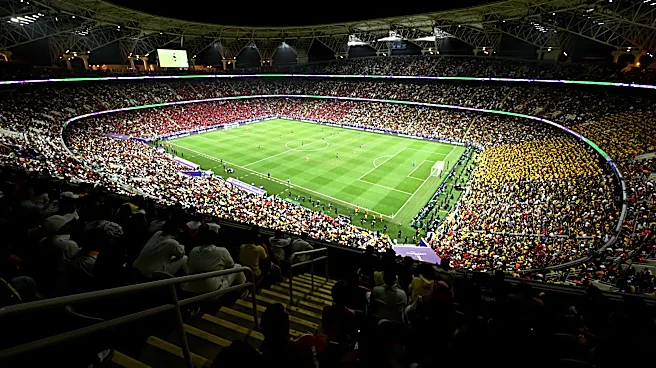
When a small college team makes a run, it doesn't just capture the heart of its campus; it often becomes “America’s Team” for a week. Morocco’s run did that on a global scale. Their passionate, red-clad fans transformed stadiums in Qatar into raucous home games, their cheers and whistles providing an unceasing soundtrack to their team’s success. But their support went far beyond the Moroccan diaspora. They became the team of the entire African continent and the Arab world, a symbol of pride and possibility. Images of players celebrating with their mothers on the pitch went viral, reinforcing the wholesome, family-centric joy of their campaign. They weren't just playing for a trophy; they were playing for the pride of millions, and that collective energy was a palpable force that seemed to lift the team to new heights with each game.