


A Deliberate Rejection of Excess
To understand 90s casual, you have to remember what came before it: the unapologetic extravagance of the 1980s. The previous decade was defined by power suits with shoulder pads, big hair, sequins, and a 'more is more' philosophy. Style was aspirational,
often performative, and closely tied to wealth and status. The shift to 90s casual was a direct and deliberate cultural backlash. It was a collective exhale, a turning away from artifice toward something that felt more real. This new mood was less about dressing for the job you wanted and more about dressing for the life you had. Authenticity became the new currency. Instead of glamour, the culture craved comfort. Instead of loud logos proclaiming status, a sense of understated ease took hold. This wasn't laziness; it was a statement. The most fashionable thing you could do was look like you weren't trying too hard.
The Uniform: Gap, Jeans, and the Blank Canvas
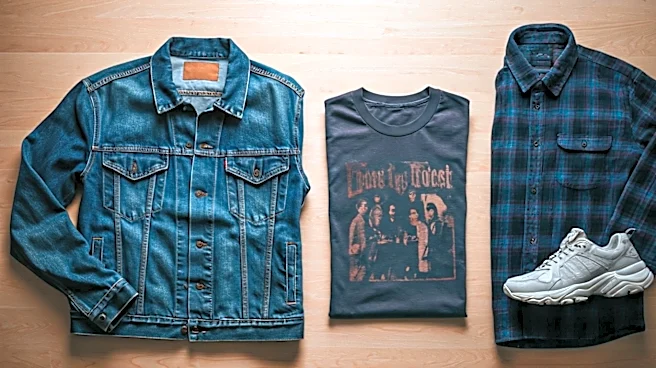
At the heart of this movement were brands that sold not fantasy, but reality. Gap, in particular, became the unofficial outfitter of the decade. Its campaigns, featuring artists and thinkers in simple khaki pants, white t-shirts, and pocket-tees, canonized the idea of a personal uniform. Fashion was no longer about a head-to-toe 'look' dictated by a designer, but a collection of versatile, high-quality basics that served as a blank canvas for individual style. Denim was central to this new uniform. While jeans were already an American staple, the 90s cemented their place as an acceptable choice for almost any occasion. Paired with a simple ribbed tank, a crewneck sweatshirt, or a plain black turtleneck, the 90s uniform was democratic, accessible, and unisex. This focus on building a wardrobe of interchangeable staples is the direct ancestor of today's 'capsule wardrobe' and 'buy less, buy better' movements.
When Subculture Became the Main Event
While brands like Gap offered a clean slate, the decade's most potent style influences bubbled up from the streets and subcultures. Grunge, born in the Pacific Northwest, turned the thrift-store aesthetic of bands like Nirvana into a global phenomenon. Kurt Cobain, with his ripped jeans, oversized cardigans, and worn-out flannels, became an accidental style icon. It was the ultimate 'anti-fashion' statement, co-opted almost immediately by high-fashion designers like Marc Jacobs in his infamous 1992 collection for Perry Ellis. Simultaneously, hip-hop culture was defining a different kind of casual. Artists and fans embraced sportswear, puffer jackets, baggy denim, and work boots from brands like Timberland and Carhartt. It was style rooted in community, utility, and bravado. Both grunge and hip-hop took everyday clothing and imbued it with powerful cultural meaning, paving the way for the streetwear dominance we see today, where a hoodie and sneakers can be the most coveted items in fashion.
The Lasting Legacy: Normcore and Athleisure
The threads of 90s casual run directly into the biggest trends of the 21st century. The decade's emphasis on unremarkable, functional clothing was reborn in the 2010s as 'normcore'—a style movement that celebrated dressing in an aggressively normal way as a form of post-fashion cool. The sea of dad jeans, plain sweatshirts, and sensible sneakers was a direct echo of the 90s uniform. More profoundly, the 90s obsession with comfort laid the groundwork for athleisure. By breaking down the barriers between what was worn for sport and what was worn for life, the decade normalized wearing sneakers, sweatshirts, and track pants as everyday attire. Today's multi-billion dollar athleisure market, where yoga pants are acceptable brunch-wear and luxury sneakers are boardroom-appropriate, owes its existence to the casual revolution of the 1990s. It proved that comfort wasn't a compromise; it was the entire point.