






The Soul of 'Made in Italy'
For decades, “Made in Italy” has been the undisputed shorthand for luxury, quality, and style. It signifies more than a point of origin; it represents a deep-rooted culture of craftsmanship. This legacy is built within a unique ecosystem of thousands
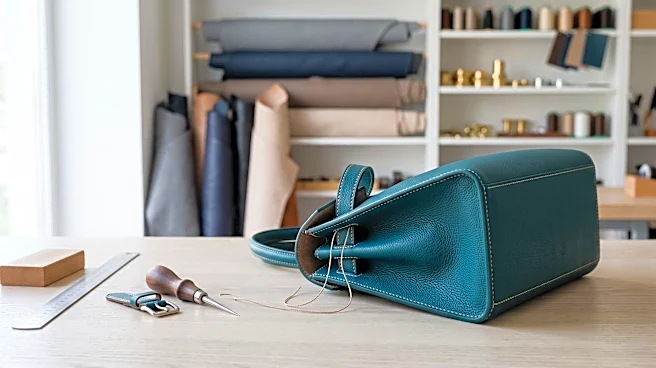
of small, often family-run, workshops and factories clustered in specialized districts, from Tuscan leather goods to Venetian shoemaking. These enterprises are the engine of the Italian fashion industry, which accounts for over 40% of Europe's luxury manufacturing. The value isn't just in the design, but in the hands that execute it: the master tailor who can shape a jacket by feel, the artisan who hand-weaves a leather bag, or the jeweler who sets a stone with painstaking precision. This human touch is the non-replicable asset that justifies a premium price and fuels a global market projected to reach over $24 billion by 2031.
A Generational Crisis
The core of the problem is a demographic time bomb. More than half of Italy's master artisans are over 50, and as they approach retirement, they are taking decades of irreplaceable knowledge with them. The pipeline of new talent has run dangerously dry. In a society that has increasingly pushed university education as the primary path to success, manual trades have been culturally devalued, viewed as a last resort rather than a prestigious career. The numbers are stark: young people under 30 make up a tiny fraction of the artisan workforce, and their numbers are not nearly enough to offset the wave of retirements. This generational gap threatens to hollow out the industry from within, leaving factories with aging workers and an uncertain future. The issue is compounded by a broader economic downturn that has seen thousands of small textile and leather workshops close in recent years, putting further pressure on the supply chain.
The Race to Re-Skill
Facing a potential collapse of their production base, Italy's luxury giants are now in a race against time to train a new generation. Recognizing that they can no longer rely on a naturally replenishing workforce, brands like Bottega Veneta, Fendi, Prada, and Brunello Cucinelli have launched their own high-level academies. These highly competitive programs aim to preserve and pass on time-honored skills, from pattern making and leathercraft to goldsmithing and feather embroidery. Bottega Veneta's Accademia Labor et Ingenium accepts just 50 students a year to learn its signature 'intrecciato' weaving from master artisans. Similarly, Brunello Cucinelli founded the Solomeo School of Arts and Crafts to teach everything from tailoring to masonry, inspired by the Arts and Crafts movement's focus on the dignity of manual work. These schools are not just training facilities; they are a strategic investment in the future of the 'Made in Italy' promise.
Redefining the Modern Artisan
The solution isn't just about teaching old techniques; it's about reframing what it means to be an artisan in the 21st century. The narrative is shifting from manual labor to high-value, creative work that no machine can replicate. Prada Group's leadership has predicted that artisans may soon be among the highest-paid workers in fashion, as their skills become scarcer and more valuable. The new training programs often integrate modern technology, like CAD for shoe lasts or laser cutting, alongside traditional handwork, creating a hybrid artisan who understands both heritage and innovation. The goal is to make these careers attractive again, not just for the passion of the craft, but as a viable, respected, and lucrative profession. With the Italian luxury sector needing an estimated 75,000 qualified professionals by 2035, the demand is clear and urgent.