








An Unhappy Arrival
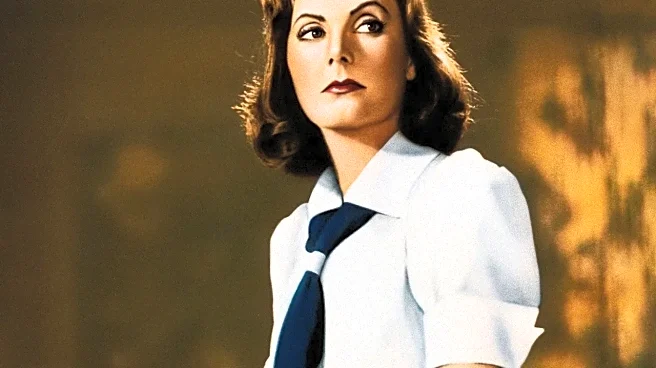
In 1925, a 20-year-old Greta Garbo arrived in Hollywood not as a future queen, but as a package deal. MGM studio head Louis B. Mayer had been primarily interested in her mentor, the acclaimed Swedish director Mauritz Stiller. Stiller insisted Garbo be part
of his contract, convinced of her potential. Mayer agreed, but his interest in Garbo quickly eclipsed his interest in Stiller. The studio immediately began trying to mold her, straightening her teeth and plucking her eyebrows to fit the American starlet image. This transformation, combined with the studio's dismissive treatment of Stiller, left Garbo feeling isolated and disillusioned in a foreign land where she barely spoke the language.
The Breaking Point
The crisis came during the production of her second American film, The Temptress. Garbo disliked the script and being typecast as a vamp. The experience was made worse when MGM fired Stiller as the director, citing his difficult nature and inability to adapt to the studio system. This was a devastating blow. Stiller was her mentor, her champion, and her primary link to home. Around the same time, her sister Alva died in Sweden, and the studio reportedly refused to let her return for the funeral. Trapped in a contract, forced into roles she disliked, and stripped of her support system, Garbo's frustration with Hollywood reached a fever pitch. The dream had become a machine, and she wanted out.
A Strategic Standoff
Instead of quietly quitting, Garbo turned her misery into leverage. Following the unexpected success of her first few films, which made her a major box-office draw, she knew her value. When her initial contract expired in 1932 after As You Desire Me, she returned to Sweden, refusing to work until her demands were met. This wasn't just a negotiation; it was a seven-month strike. She demanded a massive salary increase that would make her one of the highest-paid women in America, but more importantly, she demanded creative control—the right to choose her scripts, her co-stars, and her directors. It was a power play unheard of for a star so early in her career, and it was a direct challenge to the dictatorial power of Louis B. Mayer.
Forging the Garbo Mystique
MGM, faced with losing its biggest new moneymaker, gave in. Garbo returned to Hollywood on her own terms. Her first film under the new contract was Queen Christina (1933), a project she personally championed and for which she hand-picked her former lover John Gilbert as co-star, despite the studio's objections. This victory was the true beginning of the Garbo legend. The power she won from that early battle allowed her to cultivate her famous privacy, refusing interviews and publicity stunts. It was a principle forged in fire; her famous desire to be "let alone" was not just a line, but a career strategy born from a profound early disillusionment. Though she would eventually walk away for good in 1941, it was this first, near-exit that proved she was an artist who would play by her own rules—or not at all.