







Start with Earth
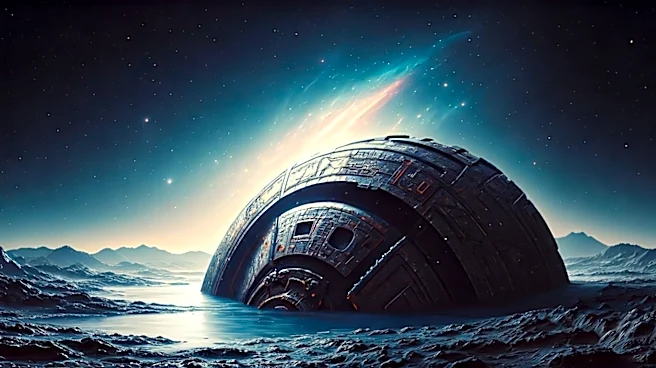
The first step in creating an alien world is often finding the most alien-looking places on our own planet. Production designers and location scouts are masters of seeing a desolate Icelandic volcanic field and envisioning it as a dying planet’s surface,
or seeing the stark, red deserts of Jordan’s Wadi Rum and picturing it as the backdrop for an epic sci-fi saga, as seen in *Dune* and *The Martian*. These real-world locations provide an invaluable foundation of authentic texture—real dirt, real rock, real light. Instead of spending millions on computer-generated grit, filmmakers can ground their fantasy in reality. For a story like Supergirl’s, which often involves desolate or strange landscapes, a quarry in the English countryside or the salt flats of Utah can provide the perfect canvas. The audience instinctively feels the reality of the space, which makes the floating cities or twin suns added later in post-production far more believable.
The Controlled Chaos of a Soundstage
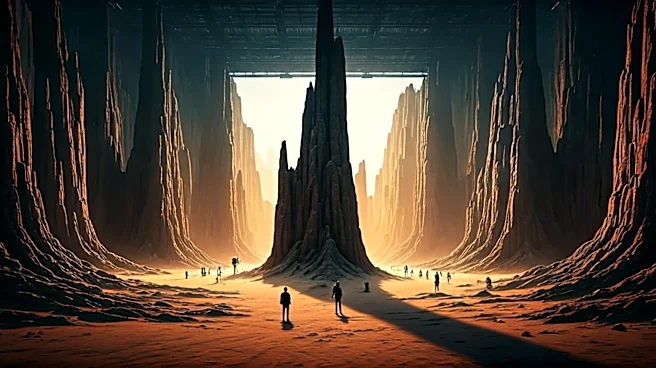
When you need total control, you head indoors. Soundstages are the heart of cinematic world-building, where entire city blocks, alien temples, and spaceship interiors are constructed from scratch. This is where art direction truly shines. Think of the crystalline, sterile Krypton from the 1978 *Superman* or the more organic, Giger-esque aesthetic of Krypton in *Man of Steel*. Those weren’t just sets; they were fully articulated visual languages built of foam, wood, plastic, and immense creativity. Building on a stage allows filmmakers to control every aspect of the environment, from the precise angle of the light to the color of the alien moss growing on the walls. It’s a painstaking process, but it allows for a level of detail and consistency that location shooting can’t match. For interior scenes on an alien planet, the soundstage is not just an option; it’s a necessity for crafting a coherent and immersive space.
The Rise of the Digital Backlot
What you can’t find and can’t build, you create with a click. Visual effects (VFX) are the final, crucial layer. This ranges from “digital matte paintings”—hyper-realistic backgrounds that extend a physical set into a massive alien cityscape—to fully computer-generated (CG) environments. But the game-changer in recent years is “The Volume,” the LED-screen technology popularized by *The Mandalorian*. Instead of acting against a green screen and imagining the world, actors perform inside a massive, curved wall of high-resolution screens displaying the finished digital environment in real-time. This technique, also known as StageCraft, not only helps actors feel more grounded in the scene but also creates realistic lighting and reflections on their costumes and skin that would otherwise be a nightmare to replicate in post-production. It’s the ultimate fusion of practical and digital, and it’s likely how the stranger corners of Supergirl’s universe will be brought to life.
Giving the World a Soul
The most important element, however, is invisible: history. A truly lived-in world feels like it existed long before the camera started rolling. Production designers achieve this through a process of cultural world-building. They create a visual bible for their alien race, defining their architecture, language, fashion, and technology based on their societal values. Is it a warrior culture? Expect sharp angles and brutalist structures. An artistic, enlightened society? Look for flowing lines and organic shapes. Designers often “kitbash” from human history, borrowing architectural motifs from ancient Rome, patterns from Mayan textiles, or philosophies from feudal Japan to create a visual shorthand the audience understands intuitively. This is what separates a generic sci-fi set from a place like Krypton, which, at its best, feels like a lost civilization we are genuinely sad to see destroyed. It’s not just a set; it's a home.