



The Allure of the Anti-Fit
We often think of expert tailoring in terms of how closely a garment follows the body’s curves. A nipped waist and a sharp shoulder have long been the hallmarks of a well-made coat. But there is another school of thought, one that prioritizes freedom
of movement and a sense of effortless volume. This is the “anti-fit,” where the coat stands slightly away from the body, creating its own shape. The effect is one of relaxed confidence. Rather than constricting the wearer, the garment provides a chic, protective shell that suggests sophistication without trying too hard.
Meet the Cocoon Cut
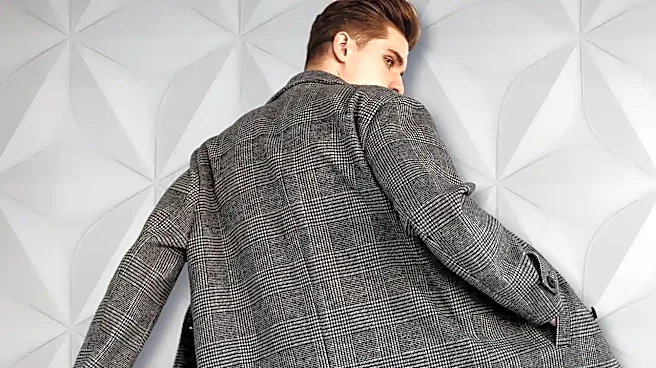
The primary technique behind this elegant drape is often called the “cocoon” silhouette. Its secret lies in a combination of two key pattern adjustments: dropped shoulders and a curved back. The shoulder seams are moved down off the natural shoulder point and onto the upper arm. This immediately softens the silhouette and removes any rigid structure from the shoulder line. Paired with this, the back panel of the coat is cut with more volume and often a subtle curve, creating a rounded shape that gently envelops the wearer, much like a cocoon. This extra space is what allows the coat to fall away from the body instead of hanging straight down.
A Nod to a Rebellious Master
This revolutionary shape is most famously credited to the Spanish couturier Cristóbal Balenciaga. In the 1950s, while Christian Dior’s “New Look” was celebrating a tightly cinched hourglass figure, Balenciaga moved in the opposite direction. He began experimenting with volume, dropping waistlines and broadening shoulders to create new, more abstract silhouettes. His cocoon coat, introduced around 1960, was a direct rebellion against the restrictive clothing of the era. It was designed to liberate women, offering a garment that was both supremely elegant and comfortable, prioritizing the line of the cloth over the line of the body beneath it.
The Simple Geometry of Grace
You don't need to be a pattern-maker to understand the basic geometry at play. Imagine a standard coat pattern, which is relatively straight. To create the cocoon effect, a designer essentially adds width and a gentle arc to the back panels. The shoulder point is lowered, and sometimes the sleeve itself is cut in one piece with the main body, like a kimono or a simplified raglan sleeve, further enhancing the seamless, rounded look. This prevents the fabric from catching on the shoulders or back, allowing it to hang freely and create that signature space and volume that defines the style. The result is a coat that looks just as interesting from the side and back as it does from the front.
How to Spot It and Style It
When you're shopping, look for coats described as “cocoon,” “oversized,” or having “dropped shoulders.” To confirm, check the shoulder seams; they should sit noticeably down your arm, not on your shoulder joint. Turn to the side in a mirror. Does the back have a subtle, elegant curve that holds the fabric away from you? If so, you’ve found it. The key to wearing this voluminous shape is balance. Since the coat provides the volume, keep the rest of your outfit relatively slim and simple. Pairing a cocoon coat with fitted trousers, skinny jeans, or a simple sheath dress creates a chic, intentional contrast that feels modern and sophisticated. You can also cinch the waist with a belt to create a different, more defined hourglass shape when desired.