



An Artist Beyond Reproach
To understand the explosion, you first have to appreciate the man’s artistic stature. By any objective measure, Elia Kazan was a giant of 20th-century storytelling. On Broadway, he directed the original productions of masterpieces like Tennessee Williams’
“A Streetcar Named Desire” and Arthur Miller’s “Death of a Salesman.” In Hollywood, he was a kingmaker. He guided Marlon Brando, James Dean, and Warren Beatty in films that redefined American cinema, including “On the Waterfront” and “East of Eden.” His work was raw, emotionally honest, and socially charged. He had already won two Best Director Oscars. On paper, no one was more deserving of a lifetime achievement award. But his career was forever linked to a single, seismic political act.
The Testimony That Broke Hollywood
The “real reason” for the 1999 uproar happened 47 years earlier. In April 1952, at the height of the Cold War Red Scare, Kazan testified as a “friendly witness” before the House Un-American Activities Committee (HUAC). The committee was hunting for Communist influence in Hollywood, creating a blacklist that destroyed careers. After initially refusing, Kazan returned and named the names of eight former colleagues from his time in the Communist Party during the 1930s. He didn’t just cooperate; he took out a defiant ad in The New York Times urging others to do the same. To his supporters, he was a patriot standing against Stalinist influence. To his detractors, he was a traitor—a “stool pigeon” who saved his own lucrative career by sacrificing his friends. That act never faded from memory.
The Decision and the Firestorm
When the Academy’s board, urged on by Kazan’s friend and actor Karl Malden, unanimously voted to grant him the honorary award in early 1999, it wasn't seen as a healing gesture. For many, it was a slap in the face. Other groups like the American Film Institute had previously refused to honor him for the same reason. The announcement ignited a firestorm. Survivors of the blacklist and their families organized protests. Hundreds prepared to picket the ceremony, with signs calling Kazan a “snitch” and “Benedict Arnold.” Hollywood was forced to publicly pick a side on a wound that had never truly closed. The debate raged: should art be separated from the artist's life? Can a sin be forgiven if the sinner never apologizes?
A Room Divided
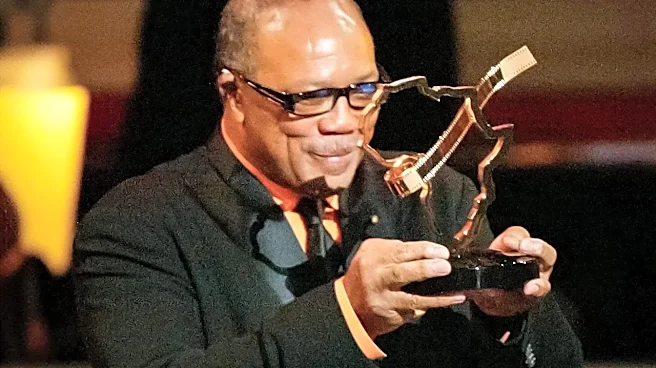
The tension inside the Dorothy Chandler Pavilion on Oscar night was palpable. Outside, protestors chanted. Inside, host Whoopi Goldberg and presenter Chris Rock made veiled jokes about the controversy. When Martin Scorsese and Robert De Niro, looking visibly tense, presented the award, the moment of truth arrived. As the frail Kazan made his way to the stage, the audience fractured. Warren Beatty, Meryl Streep, and Helen Hunt were among those who gave a standing ovation. But just as visibly, others refused. Actors Nick Nolte and Ed Harris sat with their arms crossed, staring straight ahead. Director Steven Spielberg applauded but remained pointedly in his seat. Kazan’s acceptance speech was brief and didn’t address the controversy, thanking the Academy for its “courage and generosity” before slipping away. The divided reaction was the story, a live television broadcast of an industry still at war with its past.