

The Opening Scene: Beyond the Drone Shot
Every great film needs a powerful opening scene, and a festival livestream is no different. The lazy version is a simple, high-altitude drone shot showing the scale of the festival grounds, often called 'The Farm.' A *great* livestream director uses this
shot as a thesis statement. It’s not just about showing size; it's about conveying a feeling. The ideal opening sequence might start wide, showcasing the sprawling tent city at golden hour, before seamlessly pushing in—flying over the iconic arch, dipping low past the Ferris wheel, and finally settling on the What Stage just as the first chords of the opening night headliner ring out. It’s a journey that says, 'You are no longer on your couch. You are here.' It establishes geography, mood, and stakes all in one fluid motion.
The Vocabulary of the Stage
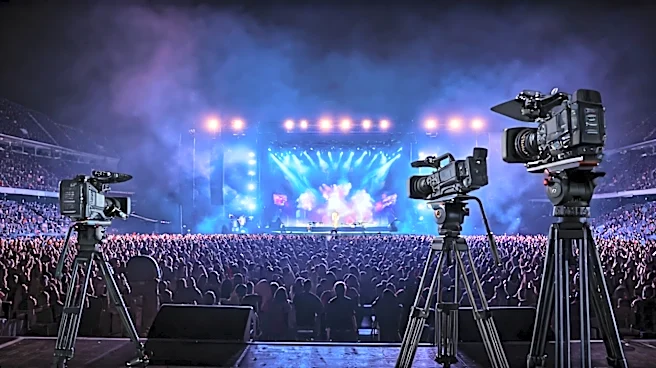
Once focused on a performance, the director’s job is to translate musical energy into visual rhythm. This is done with a basic vocabulary of shots. The 'wide shot' of the full stage is the foundation, giving context and showing the band’s interplay. But a director who lingers here is failing. The magic is in the edits. A cut to a 'medium close-up' of the lead singer lets you see the lyrics forming on their lips. A jump to an 'extreme close-up' on a guitarist's fretboard during a solo reveals the raw mechanics of the magic. The best live directors, like celebrated concert film director Hamish Hamilton, anticipate the music. They know when the drummer is about to do a complex fill and have a camera ready. They cut *with* the beat, not against it, turning the camera switcher in the production truck into another instrument in the band.
The Crowd Is a Co-Star
Bonnaroo, more than most festivals, is defined by its audience—the vibrant, eclectic, and deeply committed community that shows up to 'radiate positivity.' A livestream that keeps its cameras pointed only at the stage is telling half the story. The 'crowd cutaway' is one of the most powerful tools in the cinematic grammar. It’s not just about showing a mass of people. It’s about finding moments of individual connection: the person with tears in their eyes during a tender ballad, the group of friends in coordinated costumes dancing with joyful abandon, the lone fan utterly lost in the music. These shots transform the viewer from a passive observer into a participant in a shared experience. They affirm that what’s happening on stage matters because of how it’s being received by the thousands on the ground. It’s the visual proof of the concert’s emotional impact.
Speaking with Modern Tools
The grammar is evolving thanks to new technology. Drones are now standard, but innovative streams use them for more than just establishing shots. They can track a singer who ventures into the crowd or create dizzying overhead spirals during a song’s crescendo. Rail cams, which run on tracks at the front of the stage, provide impossibly smooth, dynamic movement that a human operator could never achieve. We're also seeing more 'Point of View' (POV) cameras—tiny, rugged cams attached to a microphone stand, a headstock, or even the drummer’s wrist. These shots provide an intimacy that was once impossible, putting you directly inside the performance. When used sparingly, these high-tech tools add powerful new 'words' to the director's vocabulary, creating moments that make viewers say, 'How did they get that shot?'