







1. Inflatable PVC
For the 2011 Monumenta exhibition, artist Anish Kapoor installed 'Leviathan', a colossal, four-chambered balloon made of a dark purple PVC skin. Visitors first entered the structure, immersing themselves in a translucent red, womb-like space where the Grand
Palais's intricate ironwork became a shadowy pattern on the membrane's surface. The light filtering through the red skin created a stunning, otherworldly experience, turning industrial plastic into a poetic, cathedral-like environment that altered viewers' sensory perception.
2. Weathering Steel
Richard Serra’s 2008 'Promenade' consisted of five towering steel plates, each 17 meters high. This wasn't polished, reflective metal. It was raw, industrial steel whose character shifted dramatically with the Parisian sky. Under the diffuse light of an overcast day, the surfaces appeared as soft, matte monoliths. But as the sun moved across the glass roof, light would catch the edges and textured surfaces, making the 70-ton plates seem to ripple and change from flat gray to shimmering silver, engaging in a silent dialogue with the architecture.
3. Water
Karl Lagerfeld was a master of spectacle, and for Chanel’s Spring/Summer 2018 show, he brought nature itself indoors. A massive cliff face with multiple, real waterfalls was constructed inside the nave. As models walked by, the moving water did what it always does with light: it scattered it into a million pieces. The constant motion created a dynamic, shimmering atmosphere that filled the entire hall, turning the light from a static source into a living, breathing element that reflected onto everything from clear plastic boots to iridescent gowns.
4. Ice
In one of his most audacious moves, Karl Lagerfeld imported a 265-ton iceberg from Sweden for Chanel's Fall/Winter 2010 show. Kept at freezing temperatures, the glacial mass was not a static prop. Under the lights of the Grand Palais, it was a material in slow transformation, glistening, melting, and cracking ever so slightly. It absorbed the hall's ambient light with a deep, blue-white glow, making the entire space feel colder and more elemental, a true arctic landscape beneath a Parisian glass roof.
5. Sheer Fabrics
Fashion shows have long understood the power of transparent textiles under the Grand Palais's light. For Chanel's Spring/Summer 2025 collection, which celebrated flight, chiffon capes and embroidered transparent shirt dresses created a sense of ethereal elegance. These materials don't block light; they capture and diffuse it. Layered, they create a ghostly, weightless effect, where the body is both revealed and obscured. The light passing through the fabric makes the wearer appear to float, turning a simple garment into a study in luminosity and movement.
6. Raw Wood
While steel and glass define the Grand Palais, Chanel has often introduced organic counterpoints. At one show, the runway was surrounded by real trees, which were later replanted. For its Spring 2027 show, the house suspended 95 bird sculptures made of wooden frames and tracing paper. Wood absorbs light differently than metal. It can appear soft and warm, its grain and texture brought into focus by a sharp sunbeam, or it can create deep, grounding shadows. It offers a rustic, earthy contrast to the soaring industrial elegance of the hall.
7. Shipping Containers
For Monumenta 2016, Huang Yong Ping filled the nave with 305 metal shipping containers, creating a landscape titled 'Empires'. These utilitarian objects, painted in various bold colors, became massive building blocks of light and shadow. The sun moving across the glass roof would illuminate different stacks at different times of day, highlighting logos in Japanese or Arabic. The corrugated metal surfaces caught the light in sharp, rhythmic patterns, transforming these symbols of global trade into a complex, shifting cityscape within the hall.
8. Gilded Bronze
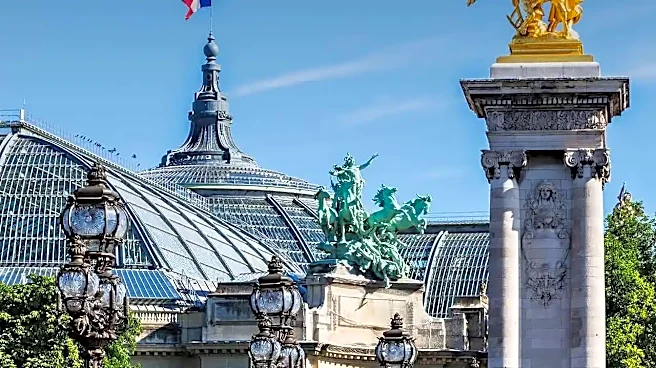
The Grand Palais itself contains materials that interact with light. The building's original 1900 design included ornate decorative elements, including gilded bronze railings and statues. While the massive exterior quadriga statues catch the direct sun, the restored interior gold leaf and bronze work play with the nave's filtered light. Bronze offers a warm, deep glow that shifts from a dark, chocolatey color in shadow to a brilliant, fiery gold when hit by a direct ray, adding a touch of baroque opulence to the industrial structure.
9. Glass
The ultimate material that defines the Grand Palais is, of course, the glass of its roof. This vast, barrel-vaulted canopy is not just a window; it's an active participant. It is the primary filter, the lens that dictates the quality of the light that everything else depends on. It softens harsh sunlight, diffuses it across the 13,500-square-meter floor, and gives the entire space its signature airy, luminous quality. Without this magnificent glass structure, none of the other transformations would be possible.