






The Birth of 'Joga Bonito'
To understand the pressure, you first have to understand the poetry. The concept of joga bonito—the beautiful game—isn't just a marketing slogan Nike invented in the '90s. It’s a core tenet of Brazilian identity, born from a desire to create a style of football
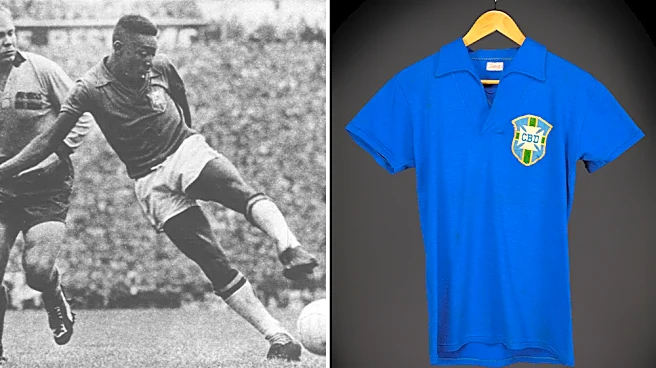
that reflected the nation’s soul: creative, rhythmic, and defiantly joyful. It was a response to the rigid, tactical European style. This philosophy reached its zenith with the 1970 World Cup team. Led by a transcendent Pelé, that squad didn’t just win; they performed a masterpiece on a global stage. Their final goal against Italy in the final is still considered the Mona Lisa of team goals—a flowing, nine-player move that ended with a thunderous strike. They established the benchmark: Brazil doesn’t just win. Brazil enchants.
The Golden Cage of Expectation
But what happens when a national identity is fused with artistic perfection on a football pitch? It becomes a golden cage. The 1970 team created a ghost that has haunted every subsequent generation. The expectation wasn’t merely to lift the trophy, but to do so with the flair and fantasy of their predecessors. The ultimate proof of this pattern is the legendary 1982 World Cup squad. Featuring geniuses like Zico, Sócrates, and Falcão, many still consider it the most beautiful team to ever play the game. They were artists who mesmerized the world. But they made a defensive error against Italy and were knocked out. Back home, they weren't just seen as losers; they were seen as failures of the philosophy itself. Their beauty wasn't enough. This was the moment the pattern calcified: joy had officially become a non-negotiable prerequisite for victory, and victory without joy was deemed hollow.
The Modern Burden Bearers
Fast-forward to the 21st century, and the pressure has been amplified by global media, billion-dollar endorsements, and the relentless churn of social media. The modern Brazilian star doesn't just carry the weight of a 200-million-person nation on his shoulders; he carries the ghosts of Pelé, Garrincha, and Zico. No one has personified this burden more than Neymar. A player of dazzling skill and creativity, he was anointed as the heir to the joga bonito throne from his teenage years. Yet, his entire career in the yellow jersey has been a battle against this impossible standard. Every flair-filled dribble is scrutinized. Every moment of joy is seen as a prelude to an inevitable, crushing responsibility. His tears of relief after a group stage win in the 2018 World Cup weren't just about the game; they were the visible manifestation of a man cracking under the strain of being the national avatar for joy.
When the Samba Stops
The tragic culmination of this pattern was the 2014 World Cup, held on Brazilian soil. The national narrative was one of destiny. But the pressure was palpable in every game. The team looked tight, anxious, and burdened. Then came the semifinal against Germany. With Neymar injured and the team emotionally fragile, the system collapsed. The 7-1 humiliation wasn't just a loss; it was a national trauma, a psychological breakdown broadcast to the world. It was the moment the beautiful game became hideously ugly, the ultimate price for a culture that has tied its self-worth so tightly to the performance of 11 men. The joy had been so thoroughly squeezed out by pressure that only a void remained. It was a horrifying spectacle of what happens when a nation demands its athletes not only be champions, but also be poets.