







Born from a National Trauma
The iconic yellow jersey didn’t always exist. In fact, it was created out of the ashes of Brazil’s most devastating sporting defeat. At the 1950 World Cup final, played in their brand-new Maracanã stadium in Rio de Janeiro, Brazil only needed a draw against
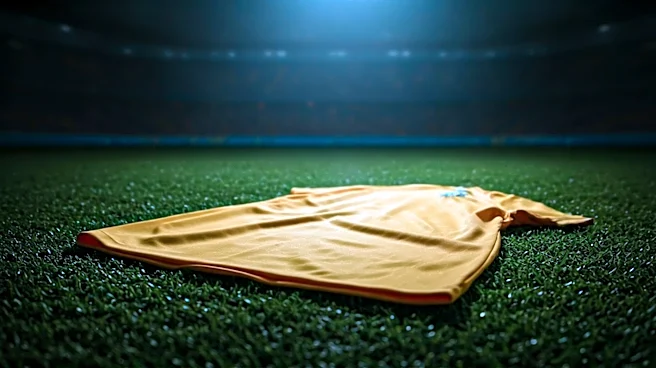
Uruguay to win the trophy. They were a lock. But they lost 2-1. The defeat, known as the *Maracanazo* (“the Maracanã blow”), was seen as a national tragedy. The all-white kit the team wore was declared cursed, a symbol of failure. In response, a newspaper held a competition to design a new uniform, with one rule: it had to incorporate the four colors of the Brazilian flag. The winner was Aldyr Garcia Schlee, a 19-year-old illustrator who designed the *Canarinho* (“Little Canary”)—a vibrant yellow shirt with green trim, paired with blue shorts and white socks. It was more than a new look; it was a deliberate attempt to symbolically rebirth the team and the nation’s hope.
The Golden Age of Genius
The new jersey didn't just erase the past; it became the uniform of the sublime. Just eight years after its creation, a 17-year-old named Pelé led Brazil to its first World Cup title in 1958. Suddenly, the yellow shirt wasn't about covering up a scar; it was a symbol of global dominance, but dominance with a flair. This was the era of *joga bonito*—the beautiful game. The Brazilian team didn’t just win; they played with a rhythmic, joyful, almost dance-like creativity that captivated the world. Through the eras of Pelé, Garrincha, Zico, and later Ronaldo and Ronaldinho, the yellow jersey became synonymous with footballing artistry. To wear it was to be an heir to this legacy. The expectation wasn’t just to score, but to score beautifully. It wasn’t just to win, but to enchant. The jersey became a global brand for Brazilian excellence and creativity, a soft power export more recognizable than almost any other national symbol.
A Heavy Crown to Wear
But a golden legacy casts a long shadow. For every generation of Brazilian players since, the pressure has been immense. Every pass, every dribble, and every goal is measured against the ghosts of the past. Anything less than breathtaking brilliance is seen as a disappointment. A methodical 1-0 victory, which would be celebrated by any other nation, is often met with a shrug in Brazil. Where is the magic? Where is the joy? This pressure reached its agonizing peak at the 2014 World Cup, held in Brazil for the first time since the *Maracanazo*. In the semi-final, an already-tense nation watched in horror as their team, clad in yellow, was systematically dismantled 7-1 by Germany. It was a humiliation that dwarfed even the 1950 loss. The jersey, once a shield of invincibility, felt like a lead weight, crushing the players under the expectation of 200 million people.
A Symbol Co-opted and Contested
In recent years, the pressure has become even more complex. The yellow jersey has been pulled into Brazil’s bitter political divides. It was adopted as the uniform of choice for supporters of the country's former far-right president, Jair Bolsonaro. Rallies were awash in a sea of yellow, transforming the shirt from a symbol of national unity into a marker of political allegiance. This has created a painful dilemma. For millions of Brazilians who oppose that political ideology, wearing the national team’s jersey suddenly felt complicated, even alienating. Some fans began wearing older jerseys or the blue away kit to distance themselves from the political statement the yellow shirt had become. It added a new, impossible burden for the players: how do you represent a nation when the very symbol of your team now divides it? They are no longer just playing for sporting glory; they are playing in a uniform that carries the weight of a nation’s fractured identity.