


The Myth: A Failed Reboot?
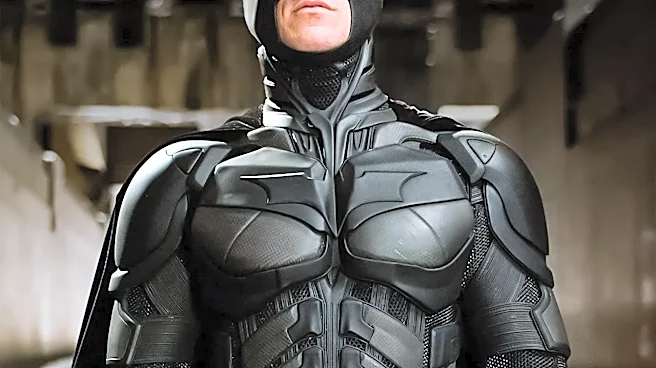
The central claim is that when Batman Begins arrived in 2005, critics were unimpressed. In this telling, Christopher Nolan’s dark, realistic take on the Caped Crusader was seen as a grim, joyless departure from what audiences expected. The narrative suggests
the film was a commercial and critical disappointment, only gaining its esteemed reputation years later, largely due to the monumental success of its sequel, The Dark Knight. This idea paints Begins as a rocky start, a noble failure that barely managed to justify its existence before its successor perfected the formula. But does this popular memory of a critical drubbing hold up to scrutiny?
The Reality: A Resounding Success
The historical record tells a completely different story. Far from being panned, Batman Begins was an immediate critical darling. Upon its release, the film earned an 84% "Certified Fresh" score on Rotten Tomatoes, an aggregate site that collects reviews. Its consensus reads: "Brooding and dark, but also exciting and smart, Batman Begins is a film that understands the essence of one of the definitive superheroes." On Metacritic, which assigns a weighted average, it scored a 70 out of 100, indicating "generally favorable reviews." Audiences polled by CinemaScore on opening weekend gave it a grade of "A." Critics didn't just like it; they hailed it as the triumphant return to form the character desperately needed.
What Critics Actually Said in 2005
Digging into the contemporary reviews reveals a wave of relief and excitement. The late, great Roger Ebert awarded it a full four stars, writing, "This is the Batman movie I've been waiting for... the movie works dramatically in addition to being an entertainment." Many praised Nolan for finally focusing on the psychology of Bruce Wayne, something previous films had only touched upon. The stellar cast, including Christian Bale, Michael Caine, Liam Neeson, and Morgan Freeman, was widely celebrated. The praise was not just for what the film was, but for what it wasn't: the campy disaster that was 1997's Batman & Robin. Nolan’s film was lauded for washing away the memory of bat-nipples and credit cards, restoring a sense of gravity and purpose to the franchise.
So, Were There Any Criticisms?
While overwhelmingly positive, the reception wasn't flawless, and these few consistent critiques may have contributed to the myth of a wider panning. One of the most frequently cited weak points was the performance of Katie Holmes as Rachel Dawes; she was even nominated for a Razzie Award for the role. Some reviewers also found the shaky-cam action sequences, particularly in the film's climax, to be murky and hard to follow—a criticism that Nolan seemed to address with the crystal-clear IMAX photography in the sequels. A few other critiques noted that some of the supporting characters felt underutilized. However, these were minor grievances in a sea of praise, not the foundation for a critical panning.
The Shadow of The Dark Knight
So why does the myth persist? A primary reason is likely the sheer, culture-shifting magnitude of its 2008 sequel, The Dark Knight. That film wasn't just a hit; it was a phenomenon. It earned over a billion dollars, won two Academy Awards (including a posthumous one for Heath Ledger), and was treated as a serious crime epic on par with films like Heat. Its 94% Rotten Tomatoes score and 84 on Metacritic surpassed its predecessor's already high marks. In the immense shadow cast by The Dark Knight, the legacy of Begins has been somewhat dwarfed. It has been retroactively framed as the solid but less spectacular setup for the main event, causing its own initial, glowing reception to be misremembered as something more muted.