

A Post-War Fashion Bombshell
On February 12, 1947, Christian Dior unveiled his first couture collection in Paris. After years of wartime austerity—fabric rationing, boxy silhouettes inspired by military uniforms, and a general mood of make-do-and-mend—his designs were a radical departure.
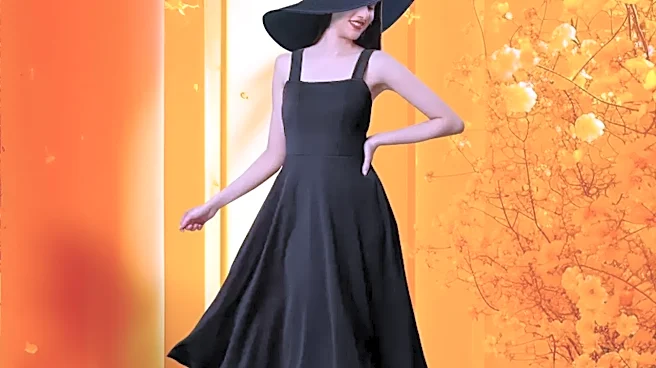
Dubbed the "New Look" by Harper's Bazaar editor Carmel Snow, the collection featured soft, rounded shoulders, a full bust, and an almost impossibly cinched-in waist that exploded into a voluminous, calf-length skirt. Models wore jackets with padded hips and skirts that used extravagant amounts of fabric, sometimes up to 15 or 20 yards. It was a celebration of opulence and an unapologetic return to a hyper-feminine form. Dior himself said he wanted to turn women from "soldier-women with shoulders like boxers" into "flowers." The look was an instant sensation, defining the dominant silhouette for the next decade.
Echoes of a Forgotten Era
While Dior's vision felt shockingly new, its roots were planted firmly in the past. The New Look's extreme hourglass figure was a direct reference to styles from nearly half a century earlier, specifically the period from the 1890s to the early 1900s known as the Belle Époque, or the Edwardian Era in Britain. During this pre-war "beautiful era," the ideal female form was the "S-bend" silhouette, characterized by a prominent bust, a heavily corseted waist, and hips pushed back to create a distinct, curvaceous profile. Women wore corsets that created a low, full chest and used padding or bustles to emphasize their hips, balancing the shape with enormous sleeves. Dior borrowed this entire framework: the constricted waist, the artificially padded hips, and the dramatic, bell-shaped skirt, all designed to create a specific, idealized female shape. It was a repudiation of the more practical, linear fashions of the 1920s and 30s and a deliberate leapfrog over the recent past.
The Psychology of a Throwback
So why would a forward-thinking designer look so far backward for inspiration? The answer lies in the psychology of the post-war moment. The Second World War had upended traditional gender roles, with women entering the workforce in unprecedented numbers and adopting practical, often masculine-coded clothing. The end of the war brought a powerful, complicated desire for a return to perceived normalcy and domesticity. Dior's revival of a historical, almost fantastical femininity was perfectly timed. It represented an escape from the trauma and scarcity of war. The extravagant use of fabric was a symbolic middle finger to rationing, a sign that luxury and abundance were possible again. For many women, the New Look was a welcome chance to embrace glamour and elegance after years of drab functionality. It wasn't just a new style; it was a new outlook.
Old Shape, New Attitude
However, the New Look was not a simple costume drama. Dior was a modernizer, not just a revivalist. He reinterpreted the old silhouette for a new generation. The heavy, rigid corsets of the Victorian and Edwardian eras were replaced with lighter girdles and waist-cinchers known as "waspies." The internal architecture of the garments—the padding and careful tailoring—achieved the shape with more structure and less bone-crushing restriction. The fabrics, though voluminous, moved with a modern grace. The inspiration may have come from a time of formality and rigid social structures, but Dior's execution felt optimistic and new. It was nostalgia weaponized as a tool for recovery, a dream of a romanticized past repackaged to signal a glamorous future. The look sparked controversy, with some feminists and even other designers like Coco Chanel decrying it as a restrictive step backward for women, but its popularity was undeniable.