






An Ambitious Gamble on Maturity
Coming off the staggering success of The Lion King, most of the studio's top animators chose to work on Pocahontas, believing it was the more prestigious project. It was conceived as a sweeping, dramatic epic, a departure from the fairy tales that had
defined the Disney Renaissance. For the first time, the studio was tackling a story (very loosely) based on a historical figure. The goal was to create a more mature love story, one that grappled with themes of cultural conflict, prejudice, and environmentalism. This was a significant tonal shift. While previous films had dramatic moments, Pocahontas was somber and serious by design, a choice that made it less of a hit with younger audiences but signaled a new narrative ambition for mainstream animation. The film intentionally ends not with a wedding, but with the two leads parting ways, a bittersweet conclusion that was unheard of for a Disney animated romance at the time.
A New Look for a Disney Heroine
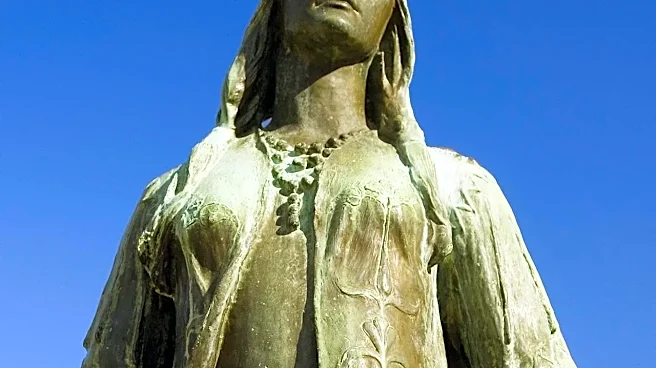
Supervising animator Glen Keane, the talent behind characters like Ariel and the Beast, was tasked with creating a different kind of protagonist. The directive from studio head Jeffrey Katzenberg was to make Pocahontas "the most idealized and finest woman ever made." The animation team moved away from the softer, rounder designs of previous heroines. Inspired by the angular, stylized art of Eyvind Earle from Sleeping Beauty, Pocahontas had a more graphic and sharp look. Keane and his team aimed for a more realistic sense of anatomy and subtle acting, a daunting task in a medium known for caricature. While the historical and cultural representation was fraught with issues—including aging up the real-life Pocahontas from a child to a young adult to serve the romantic plot—the artistic goal was to create a character who felt both aspirational and grounded in a new way.
The 'Colors of the Wind' Revolution
If one sequence cemented the film's artistic legacy, it was "Colors of the Wind." The Oscar-winning song, with lyrics by Stephen Schwartz and music by Alan Menken, was a philosophical and visual departure from typical Disney musical numbers. Instead of advancing a simple plot point, the song is a treatise on animism, empathy, and challenging a Eurocentric worldview. Visually, the sequence is a masterpiece of abstract and expressive animation. As Pocahontas sings, the world dissolves into painterly streaks of color, leaves swirl with magical energy, and spirits emerge from the natural world. It demonstrated that a musical number could be a philosophical argument conveyed through breathtaking, non-literal art. This approach, blending character emotion with symbolic, flowing visuals, became a powerful new tool in the animation playbook and influenced countless sequences in films that followed.
A Complicated But Undeniable Legacy
It's impossible to discuss Pocahontas without acknowledging its deep historical inaccuracies and the valid criticism it has received for romanticizing a painful chapter of colonial history. The film simplifies complex events, perpetuates stereotypes, and creates a fictional romance where one did not exist. Yet, its artistic impact remains. By tackling a more dramatic tone, pushing for more realistic character animation, and using sequences like "Colors of the Wind" to explore complex ideas, Pocahontas expanded the emotional and visual language of what a mainstream animated feature could be. It was a flawed but pivotal film that served as both a creative leap forward and a cautionary tale. It pushed animation to be more adult and artistic, even as it failed to handle its historical subject matter with the care it deserved.