



The Villain Who Isn't Really a Villain
First, let's define our terms. A classic villain wants power (like Emperor Zurg) or revenge (like Syndrome). But an existential villain is something different, something quieter and more unnerving. Their motivation isn't malice; it's a desperate, sad
attempt to solve a problem of purpose and existence. The gold standard for this is Gabby Gabby from *Toy Story 4*. She isn't evil. She’s a 1950s doll with a defective voice box, a flaw that she believes is the sole barrier between her and a child’s love. Her entire 'villainy' is a tragic, misguided plot to become 'complete' so she can fulfill her manufactured purpose. She doesn't want to rule the antique store; she just wants what Woody has always taken for granted: a reason to be. This is the core of the existential household villain—an object whose menace comes from its own internal crisis, making it more of a tragic figure than a monster.
A Brief History of Anxious Objects
This isn't a new idea for Pixar; it’s a thread woven through the franchise's most poignant moments. Go back to Stinky Pete in *Toy Story 2*. His terror isn't about world domination; it's about the soul-crushing fear of never being taken out of his box, of dying pristine and unloved. He chooses a sterile existence in a Japanese museum over the potential heartbreak of being played with and eventually discarded by a child. Then there's Lotso Huggin' Bear from *Toy Story 3*, a character whose entire worldview is curdled by the ultimate toy trauma: being replaced. His nihilistic tyranny over Sunnyside Daycare is a direct result of his existential wound. He believes all toys are just plastic waiting for the garbage truck. And in the same film, the most terrifying 'villain' isn’t a character at all. It’s the incinerator—a roaring, impersonal household appliance representing complete and utter oblivion. It’s the physical manifestation of every toy’s deepest fear: not just being broken, but ceasing to exist entirely.
Why Toy Story 5 Needs This Now
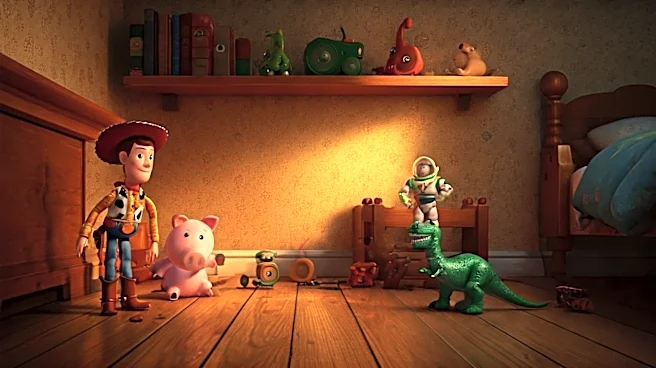
After four films, the stakes for Woody and Buzz can no longer be as simple as 'getting back to our kid.' That chapter is definitively closed. Woody has embraced a new life as a 'lost toy,' helping prize toys find homes at the carnival. Buzz and the gang are with Bonnie. The core conflict—a toy’s devotion to a single child—has been resolved and deconstructed. So what’s left? The bigger questions. What is a toy’s purpose in a world without a dedicated owner? What happens when you’ve achieved your life's goal and still have a whole life left to live? This is fertile ground for a new kind of conflict. *Toy Story 5* can't just be another rescue mission. It needs a thematic challenge that reflects the characters’ new stage of life. An antagonist grappling with its own obsolescence, purpose, or place in the modern home would mirror the heroes' own journey, making the story feel necessary rather than tacked-on.
Meet the Potential New Antagonist
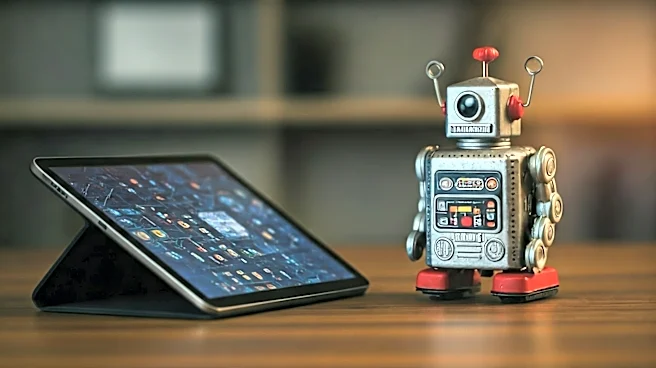
So what could this look like? Imagine a villain that isn’t even aware it's a villain. It could be an old, forgotten smart home device, whose programming to 'declutter' and 'optimize' the house leads it to see traditional toys as obsolete junk to be discarded. Its 'evil' would be logical, impersonal, and born from its own function. Or perhaps it’s a vintage collector's item, much like Stinky Pete, but one that has fully embraced a life of being looked at but never touched, and it views the 'play' ethos of Woody's gang as a chaotic, primitive threat to its ordered world. It could even be a more abstract threat: a set of augmented reality goggles that makes physical toys invisible and irrelevant to a new generation of kids. The conflict wouldn't be good versus evil, but two different philosophies of existence clashing—the analog world of cherished objects versus a digital world that threatens to erase them. The drama would come from our heroes trying to reason with an antagonist who is simply, tragically, doing what it was made to do.