







The Numbers on the Surface
At first glance, Nvidia's latest earnings report looks like a victory lap for a dominant tech company. For its second quarter of fiscal year 2027, the company announced revenue of $96.2 billion, a staggering 106% increase from the year prior. The engine
of this growth, its Data Center division, grew even faster, hitting $89 billion in sales. These are figures that reflect an insatiable global demand for the company's AI chips, which have become the foundational building blocks of the artificial intelligence boom. With profits climbing just as fast and a forecast for its first $100 billion-plus quarter on the horizon, the financial picture looks flawless. But buried in the company's own commentary was a statement that completely reframes this success.
The Real Story: A Production Bottleneck
The most telling part of Nvidia's earnings call was not the backward-looking results, but the forward-looking warning. Executives stated that they expect supply to be a bottleneck at least through the end of fiscal year 2028. While projecting immense 70% revenue growth for that year, they clarified that this figure isn't limited by demand—it's limited by what they can physically produce. CEO Jensen Huang was blunt, stating that the “entire supply chain is challenged.” This is a profound shift. For years, the question was whether companies would keep buying AI chips. Now, the question is whether Nvidia and its partners can make them fast enough. Demand is a given; the new ceiling is logistics.
Meet CoWoS, the Billion-Dollar Choke Point
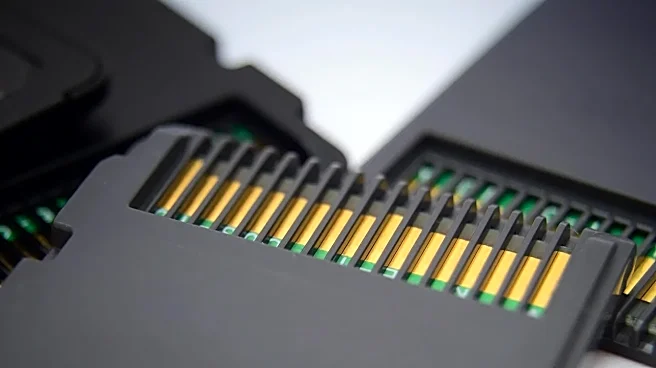
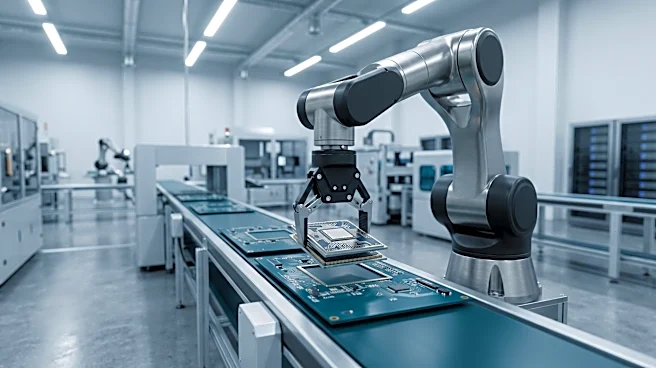
The AI supply chain is incredibly complex, but the most acute bottleneck has a name: CoWoS, or Chip-on-Wafer-on-Substrate. This is an advanced packaging technology, primarily from manufacturing partner TSMC, that is essential for assembling Nvidia's powerful GPUs. Think of it like this: Nvidia designs the world's fastest engine (the GPU), but TSMC is one of the only companies that can build the specialized chassis and transmission (CoWoS) needed to connect it to the high-speed memory that makes it useful. Without this packaging, the chip is just a piece of silicon. Capacity for CoWoS is sold out for years, with Nvidia reportedly booking more than half of TSMC's entire output. Other constraints, like the availability of high-bandwidth memory (HBM), also play a critical role, creating a multi-layered production challenge.
A Barometer for the Entire AI Industry
Because Nvidia is so central to the AI buildout, its supply situation has become a proxy for the entire industry's health. The company is no longer just reacting to demand; it is aggressively securing its future by making massive financial commitments for production capacity. Nvidia reported it has now locked in an astonishing $279 billion in supply commitments, a figure that has nearly tripled in just six months. This demonstrates a strategic pivot from simply selling chips to orchestrating a global manufacturing and logistics operation. It shows that the next phase of the AI revolution will be won or lost not in the lab, but on the factory floor. The pace of innovation now hinges on the ability to solve very physical, industrial-scale problems.