







The world of artificial intelligence is booming, with company valuations soaring into the trillions. But the secret isn't just clever code. It’s a gritty, industrial-scale war for a finite resource: raw computational power.
The Engine of Modern AI
When you hear the word 'compute'
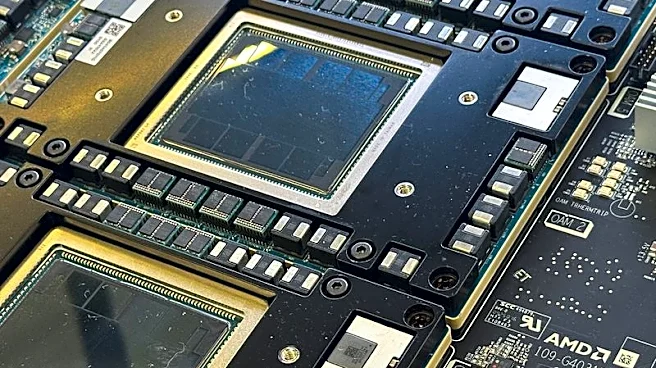
in the context of AI, it’s easy to think of a single, super-fast computer chip. But the reality is far more complex. Modern AI relies on a sprawling, power-hungry ecosystem of physical infrastructure. The primary workhorses are Graphics Processing Units (GPUs), specialized chips originally designed for video games that happen to be perfect for the parallel processing AI demands. But even the best GPUs are useless without a vast support system. This includes the data centers that house them, advanced networking to link thousands of chips together, and, most critically, enormous amounts of electricity to power it all and sophisticated cooling systems to prevent them from melting. One analyst from Gartner described the global buildout of AI data center capacity as 'the largest infrastructure project humanity has even undertaken'. Think of it less like a single engine and more like an entire automotive factory: you need the assembly line, the power plant, and the logistics network just to produce one car.
The Great Hardware Squeeze
The core of the bottleneck lies in a simple, brutal economic reality: demand for high-end AI chips is vastly outstripping supply. Training a cutting-edge large language model (LLM), the technology behind systems like ChatGPT, can cost over $100 million in compute power alone. Companies from every sector are scrambling to build or rent this capability, creating a gold rush for the hardware that makes it possible. This has given companies like Nvidia, which designs the most sought-after GPUs, immense market power. Its Data Center revenue has surged, jumping 117% year-over-year in a recent quarter, reflecting this intense demand. The competition is so fierce that access to compute has become the central issue defining the entire industry. This scarcity isn't just about the chips themselves; it extends to the entire supply chain, including power availability, which now dictates where AI workloads can even be deployed. According to a recent survey, infrastructure constraints have now overtaken budget as the primary concern for companies trying to expand their AI initiatives.
From Scarcity to Trillion-Dollar Valuations
This physical bottleneck is the foundation upon which today's staggering AI valuations are built. Investors aren't just betting on the promise of future AI applications; they're rewarding the companies that control the 'picks and shovels' in this digital gold rush. The logic is straightforward: if compute is the scarce and essential resource needed to build the future, then the companies that design, manufacture, or own that compute infrastructure have a powerful and defensible economic moat. This group includes chip designers like Nvidia, the cloud computing giants (Amazon, Microsoft, and Google) that buy up the majority of these chips, and the data center operators themselves. While some worry about a dot-com-style bubble, proponents argue today's situation is different because the spending is tied to real, contracted demand from the world's largest tech companies. The valuation of an AI infrastructure company isn't just a bet on software; it’s a tangible reflection of its control over the physical assets that make AI possible.
The Race to Widen the Pipe
No bottleneck lasts forever,
and a global race is underway to solve the compute crunch.
Competitors to Nvidia,
such as AMD and Intel,
are developing their own powerful AI chips.
Major tech players like Google,
Amazon,
and Meta are also designing custom inhouse processors (TPUs,
Trainium,
etc.) to optimize performance and reduce their reliance on a single supplier.
Beyond hardware,
innovation is happening in software to make AI models more efficient,
allowing them to do more with less processing power.
Some researchers are even exploring entirely new types of computer architecture.
However,
many experts believe the bottleneck is shifting,
not disappearing.
As compute capacity grows,
other constraints like data center power,
grid stability,
and even memory bandwidth are becoming the next major hurdles.
Some analysts now argue that 'power is probably the forever bottleneck',
a problem that will take years and trillions of dollars in investment to solve.