



The Demo That Dazzles
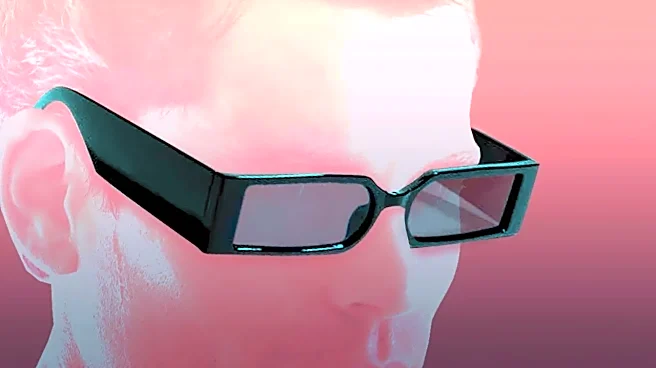
Imagine a keynote stage. A confident CEO walks out wearing what looks like a normal pair of stylish eyeglasses. As they speak, helpful notes, translations, and 3D models appear in their vision, invisible to the audience. They take a call, identify a plant,
and navigate across the stage with digital arrows guiding their path. This is the promise of AR, and the demos are undeniably compelling. They paint a picture of a world where our digital and physical lives finally merge. The problem is that for years, these demos have been just that: demos. The devices are often bulky, have abysmal battery life, or are tethered to external hardware. But a quiet revolution is happening in optical physics that could finally deliver on these promises.
What Is a Waveguide, Anyway?
The key to making AR glasses that don't look like a sci-fi prop is a component called a waveguide. Think of it as a transparent superhighway for light. A tiny projector, usually hidden in the arm of the glasses, shoots an image into the edge of the lens. The waveguide, which is the lens itself, then 'guides' this light across its surface using a principle called total internal reflection, bouncing it between a series of microscopic mirrors or gratings until it is directed into your eye. All the while, the lens remains almost perfectly transparent, allowing you to see the world around you. It’s an incredibly elegant solution that's responsible for mixing the real and the digital. But this process is notoriously inefficient.
The Detail Hidden in Plain Sight: Efficiency
This brings us to the tiny detail that matters more than any software feature: luminance efficiency. In simple terms, this is the percentage of light from the micro-projector that actually makes it to the user's eye. For a long time, this number has been punishingly low. Much of the light is lost or leaks out, an issue known as 'eyeglow,' where the user's lenses visibly shine to outsiders. Low efficiency is a cascade failure. To get a bright-enough image for outdoor use, you need an incredibly bright, power-hungry projector. A power-hungry projector generates heat and, of course, drains the battery in a flash. This forces manufacturers into a corner, leading to the bulky designs and short-lived batteries that have plagued the industry. A breakthrough in efficiency—even a few percentage points—is a monumental achievement.
Why Efficiency Is Everything
Improving waveguide efficiency is the domino that knocks down all the other major problems. A more efficient waveguide means you can use a dimmer, less powerful light source. That translates directly to longer battery life, the single biggest request from potential users. A less powerful projector also means less heat, making the glasses more comfortable to wear for extended periods. Most importantly, it allows for miniaturization. The entire optical engine—projector, battery, and supporting chips—can shrink. This is how you get from a bulky headset to something you’d be happy to wear all day. Companies across the industry are racing to perfect new manufacturing techniques for so-called geometric or diffractive waveguides that promise to boost this key metric.
The Race Is Won in the Lab
While major tech companies generate headlines with flashy concept videos, the true winners of the AR race are being decided in materials science labs and optical fabrication plants. The ability to mass-produce highly efficient and uniform waveguides at a reasonable cost is the industry’s holy grail. It's less glamorous than demoing a new AI assistant, but it's far more important. A recent pivot by early pioneer Magic Leap to focus solely on supplying waveguides to other companies underscores this reality: the component itself is becoming the critical piece of the puzzle. The next time you see an AR demo, don't just watch the floating holograms. Pay attention to the device itself. Is it small? Is the image bright? Does it last for more than an hour? The answers to those questions are found not in code, but in the quiet, complex physics of glass.