

1. Peloton: The Proprietary Hardware Trap
Like Wang, Peloton built a beautiful, closed ecosystem. It sold high-end hardware (bikes and treads) tied to its own subscription software, and for a while, it was the king of at-home fitness. But Wang’s fatal mistake was believing its proprietary systems
were immune to cheaper, general-purpose computers. Peloton fell into the same trap. As the pandemic-era boom faded, customers balked at the high upfront cost when they could get similar experiences using cheaper hardware with third-party apps. Peloton mistook a temporary market capture for permanent loyalty, a lesson Wang learned when PC software like WordStar and MultiMate started mimicking its features on inexpensive hardware.
2. Nvidia: The Dominant Ecosystem
Nvidia’s current dominance in AI chips is staggering, but the real parallel to Wang lies in its software moat: CUDA. CUDA is the programming language for Nvidia's GPUs, and the entire AI industry is built on it. This creates immense customer lock-in. In the 1970s and 80s, Wang had a similar advantage; its word processing systems were the gold standard, and entire office workflows were built around them. The risk for Nvidia is the same one that doomed Wang: a paradigm shift. If a new, more open AI development platform emerges that doesn't rely on Nvidia's hardware, the company could find its powerful ecosystem suddenly becoming a gilded cage, just as Wang did when the open PC market made its specialized machines obsolete.
3. Tesla: The Visionary Founder's Gambit
Dr. An Wang was a brilliant inventor and the indispensable heart of his company. His vision drove its success, but his iron grip also led to fatal errors, like an ill-fated attempt at dynastic succession and a refusal to abandon proprietary systems. Elon Musk’s role at Tesla is similarly central. His vision has revolutionized the auto industry, but his leadership style is also described as erratic, creating instability. Like Dr. Wang, who famously took on IBM, Musk thrives on bold, industry-shaking moves. The cautionary tale here is whether Tesla can institutionalize its innovation beyond its singular, indispensable leader to avoid the succession crisis and strategic inflexibility that crippled Wang Laboratories after its founder's influence waned.
4. Meta: The Bet-the-Company Pivot
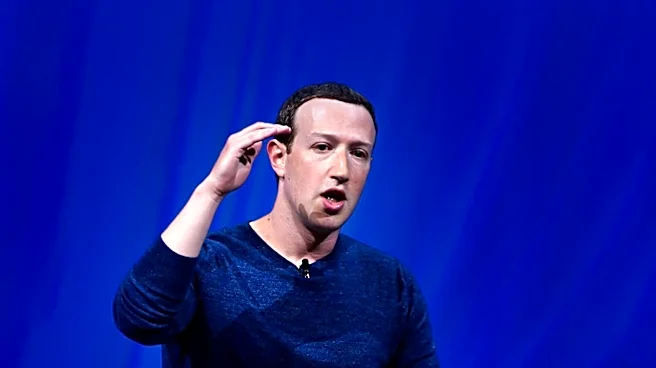
In the face of a changing market, Wang Laboratories was slow to pivot from its core business of minicomputers and word processors to the emerging world of personal computers. Meta faces a similar existential threat. With its core social media business aging and facing intense competition, Mark Zuckerberg has bet the company's future on the metaverse—a costly and uncertain gamble. While recent moves show a pivot-within-a-pivot toward more practical AI applications, the massive losses from its Reality Labs division echo the kind of strategic miscalculation that can bring a giant down. Like Wang, Meta is trying to force a new paradigm rather than adapting to the one users are already choosing, a high-stakes strategy that rarely pays off.
5. Intel: The Fallen Giant's Turnaround
At its peak, Wang was a three-billion-dollar company that went head-to-head with IBM. Intel was once the undisputed king of microprocessors, a company whose name was synonymous with computing. But just as Wang was blindsided by the PC, Intel largely missed the mobile revolution and fell behind rivals in the AI boom. Today, Intel is in the midst of a difficult, expensive turnaround, attempting to regain its technological leadership and become a major chip foundry for other companies. Its struggle mirrors Wang’s final years, when it belatedly tried to embrace open systems and resell IBM computers to survive. For Intel, the challenge is to prove that, unlike Wang, its turnaround attempt is not a case of too little, too late.