





The mAh Myth: Why Bigger Isn't Always Better
For the better part of a decade, phone manufacturers have been locked in a milliamp-hour (mAh) arms race. The logic was simple and easy to market: a bigger number meant a bigger battery, which meant more time before you were hunting for a charger. A 5,000
mAh battery was unequivocally better than a 4,500 mAh one. This single data point became the shorthand for all-day endurance. But as we head into late 2026, this simplistic view is becoming obsolete. The mAh rating only measures capacity, which is just one piece of the puzzle. It tells you nothing about how efficiently the phone uses that power, how fast it charges, or, most critically, how well that battery will perform after a year or two of daily use. We've all felt it—the brand-new phone that easily lasts a full day slowly becomes a device that needs a top-up by 3 PM. That decline is where the real story is, and it's a story that mAh alone can't tell.
The New King: Charge Cycle Lifespan
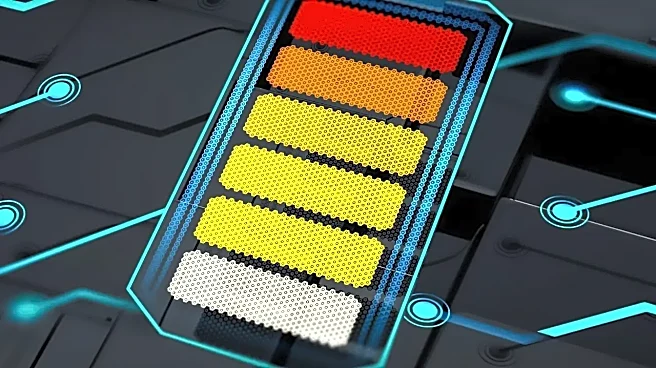
The metric that truly matters now is battery longevity, specifically its rated "charge cycle" life. A charge cycle is one full discharge and recharge of the battery's capacity. This doesn't have to happen in one go; using 60% one day and 40% the next counts as one cycle. The industry standard defines a battery's useful lifespan by the number of cycles it can endure before its maximum capacity drops to 80% of its original state. Most typical lithium-ion phone batteries are rated for about 300 to 500 cycles, which translates to roughly two to three years of average use before significant degradation kicks in. After hitting that 80% threshold, the decline often accelerates, and your user experience suffers dramatically. This is the metric that will separate the next generation of great phones from the merely good ones. A phone that promises 1,000 or more cycles before hitting that 80% cliff offers a fundamentally more durable and valuable product.
Why Longevity Changes Everything
The focus on longevity is a direct response to a shift in consumer behavior and technological ceilings. People are holding onto their smartphones for longer than ever before. With flagship phone prices consistently pushing past the $1,000 mark, a two-year lifespan is no longer an acceptable proposition for many. A battery that degrades quickly is a form of planned obsolescence, forcing a costly replacement or repair. Furthermore, the annual gains in raw battery capacity from traditional lithium-ion technology are shrinking. Manufacturers are hitting a wall. At the same time, rival companies, particularly in China, have aggressively adopted new silicon-carbon battery technology, which allows for greater energy density and is pushing the conversation toward longevity. Some brands are already advertising batteries that maintain health for four or even five years, completely reshaping user expectations. For a company like Google, which has not yet adopted this new tech, proving the long-term stamina of its batteries is no longer optional—it's critical.
Google's Challenge with the Pixel 11
This brings us to the Pixel 11. Recent Pixel models have faced criticism for battery performance that, while often sufficient, rarely leads the market. Leaks and early reports around the Pixel 11 suggest that Google isn't planning a massive jump in raw mAh capacity, with some Pro models even rumored to have slightly smaller batteries than their predecessors. If Google can't win on size, it must win on intelligence and endurance. The company's biggest strength is software and AI. An aggressive focus on battery longevity, communicated clearly to consumers, would be a classic Google move. This could involve advanced AI-managed charging that optimizes for battery health, better thermal management to reduce heat-related degradation, and a guaranteed number of charge cycles. While Apple and Google have both started rating recent phones for 1,000 cycles, making this a central pillar of the Pixel 11's identity would be a powerful statement. It would pivot the narrative from a simple numbers game to a promise of lasting value and reliability, directly addressing one of the biggest long-term pain points for all smartphone users.