




The Old-School Lockbox: Symmetric Encryption
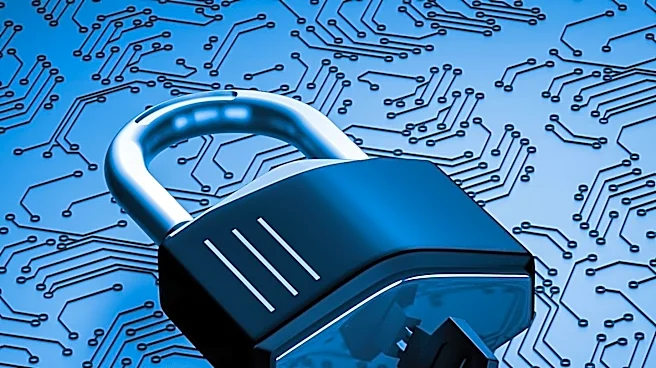
Imagine you have a super-strong lockbox. You use a single, special key to lock it and the exact same key to open it. That's symmetric encryption. It’s been around in principle for centuries, evolving from ancient Caesar ciphers to modern digital workhorses
like AES (Advanced Encryption Standard). Its main advantage is raw speed. Because it uses one key and relatively simple math, it’s incredibly fast and efficient at scrambling and unscrambling huge amounts of data. This makes it perfect for encrypting the entire contents of your hard drive or securing a high-volume data stream. But it has a huge, glaring weakness: key distribution. How do you securely give the key to the person who needs to unlock the box? If you send it over an insecure channel, anyone can intercept it. And if that single key is compromised, all data it ever locked is now vulnerable.
The Public Mailbox Trick: Asymmetric Encryption
The key distribution problem stumped cryptographers for years. Then, in the 1970s, a revolutionary idea emerged: asymmetric encryption, also known as public-key cryptography. This was a complete game-changer. Instead of one key, you have a pair of mathematically linked keys: a public key and a private key. Think of it like a personal mailbox. You can give a copy of your mailbox slot (the public key) to everyone. Anyone can use it to drop a letter (encrypted data) inside. But only you, with your unique physical key (the private key), can open the mailbox and read the letters. The private key is never shared. This brilliantly solves the key distribution problem. You can post your public key on a billboard, and it doesn't matter who sees it. The main drawback? It’s incredibly slow. The complex math involved makes it computationally expensive and impractical for encrypting large amounts of data.
The Real Reason: A Partnership, Not a Rivalry
So, why not just use the more secure-sounding asymmetric method for everything? The real reason they were designed this way boils down to this trade-off: speed versus security of exchange. They aren't rivals; they are teammates, each designed to cover the other's weakness. Symmetric encryption is the sprinter, built for blinding speed but needing a secure handoff. Asymmetric encryption is the strategist, slow and deliberate, but capable of creating that secure handoff out of thin air. Neither is universally “better” or “more secure”; they simply have different jobs. One was designed for bulk data protection, while the other was designed for authentication and, crucially, for securely sharing the key needed by the first one.
How It All Works Together in Your Browser
You see this teamwork every time you visit a secure website (one with HTTPS in the address bar). This process is often part of what's called the SSL/TLS handshake. Here’s a simplified version: Your browser connects to the website's server. The server sends your browser its public key. Your browser uses that slow-but-secure public key to encrypt a brand new, randomly generated symmetric key (often called a session key) and sends it back to the server. The server uses its private key to decrypt this package and retrieve the symmetric key. Now, both your browser and the server share the same secret symmetric key. For the rest of your session, all communication—the web pages, your passwords, your credit card info—is encrypted and decrypted at high speed using that fast symmetric key. It’s a hybrid approach that gives you the best of both worlds: the secure key exchange of asymmetric encryption and the high-speed data protection of symmetric encryption.