








Meta is on an unprecedented hardware buying spree, spending tens of billions on specialized AI chips. This isn't just about stockpiling parts; it's a calculated strategy to control its own destiny in the age of artificial intelligence.
A Mountain of Chips
To understand Meta's
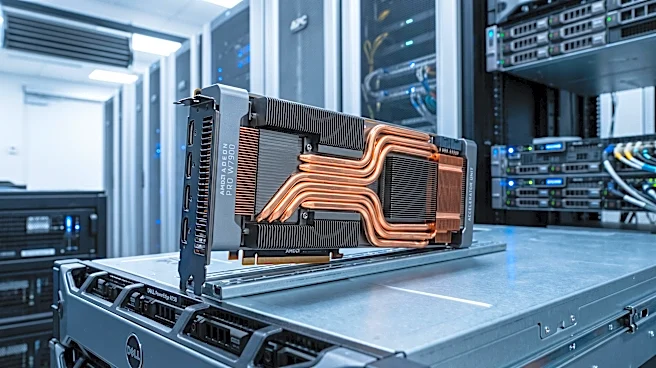
AI ambitions, you first have to appreciate the sheer scale of its hardware acquisition. The company has been purchasing NVIDIA's top-tier GPUs, like the H100, by the hundreds of thousands. By the end of 2024, Meta's infrastructure was slated to possess the computing equivalent of nearly 600,000 H100 GPUs. More recent plans aim to expand its total GPU count to around one million units. This massive arsenal of chips is the raw power required to train and run increasingly complex AI models, including its own Llama family of large language models. While rivals like Microsoft, Google, and Amazon are also investing heavily, Meta's capital expenditure has exploded, with forecasts for 2026 reaching as high as $145 billion, almost entirely dedicated to AI infrastructure. This spending spree isn't just about keeping pace; it's about building a computational fortress.
The Custom Silicon Gambit
Buying chips from NVIDIA, the dominant market supplier, is one thing. Building your own is another. This is the core of Meta's pivot toward vertical control. The company is aggressively developing its own line of custom AI accelerators, dubbed MTIA (Meta Training and Inference Accelerator). The goal isn't necessarily to replace NVIDIA overnight, but to create specialized, cost-effective hardware optimized for Meta's specific workloads, like the ranking and recommendation algorithms that power Facebook and Instagram feeds. By designing chips in-house, Meta can tailor the hardware to its software, achieving efficiencies that off-the-shelf GPUs can't match. The company has an ambitious roadmap, planning four new generations of MTIA chips within two years—a development cycle far faster than the industry standard. This move is a clear signal that Meta is unwilling to remain dependent on a single supplier for the most critical component of its future.
What 'Vertical Control' Actually Means
Vertical control, or vertical integration, is a classic business strategy: owning multiple stages of your supply chain. For Meta in the AI era, this means controlling every layer of the infrastructure stack. It starts with the physical data centers, some of which are being designed on a scale that dwarfs previous projects. It moves up to the custom silicon (MTIA) and networking fabrics that allow tens of thousands of chips to act as a single supercomputer. Above that sits PyTorch, the AI software framework Meta developed and open-sourced. At the very top are the AI models themselves, like Llama. Think of it like Apple's playbook: by designing its own chips (like the M-series), operating system (iOS/macOS), and hardware (iPhone/Mac), Apple creates a tightly integrated ecosystem it fully controls. Meta is applying the same logic to AI, building an end-toend system where every component is optimized to work together.
An Arms Race for AI Dominance
Meta's strategy isn't happening in a vacuum. It's a direct response to the competitive landscape where control over infrastructure is becoming a key battleground. Google has long developed its own Tensor Processing Units (TPUs), and Amazon Web Services has its Trainium and Inferentia chips. Microsoft has also entered the custom silicon game with its Maia accelerators. Unlike these competitors, however, Meta historically has not operated a major cloud business that rents compute power to other companies. Its infrastructure has been built primarily for its own products. This makes the massive investment a pure cost bet on the future value AI will bring to its own apps and services. By building a vertically integrated stack, Meta aims to lower long term costs, reduce reliance on third parties, and gain a performance edge, positioning itself not just as a company that uses AI, but as a foundational power in the AI economy.