






Marc Benioff: The Culture Evangelist
If Watson had his “THINK” signs, Marc Benioff has V2MOM. The Salesforce founder is a modern disciple of Watson’s belief that a company is, first and foremost, a culture. Watson united his workforce with a strict dress code and a shared sense of corporate
identity. Benioff achieved a similar feat with a more contemporary toolkit. He created a management process called V2MOM (Vision, Values, Methods, Obstacles, Measures) to ensure every single employee is aligned with the company’s mission. He also built the concept of "Ohana," the Hawaiian word for family, into the corporate DNA, fostering a sense of belonging and collective purpose. Just as Watson transformed C-T-R by giving its employees a grand mission, Benioff built Salesforce by creating a system where everyone, from an intern to a top executive, understands their role in the larger vision.
Herb Kelleher: The Employee-First Champion
Thomas Watson Sr.’s foundational belief was a deep respect for the individual employee. Decades later, Southwest Airlines co-founder Herb Kelleher took that idea and made it his central business strategy. While most companies paid lip service to customers coming first, Kelleher’s mantra was revolutionary: employees come first. He reasoned that if you treat your employees with genuine care and respect, they will, in turn, deliver exceptional service to customers, which ultimately benefits shareholders. This philosophy built a fiercely loyal workforce and a company culture famous for its spirit and resilience. Like Watson, who saw his employees as partners in a great endeavor, Kelleher built an organization where people felt valued not just for their labor, but for their individuality, creating one of the most durable competitive advantages in a brutal industry.
Jeff Bezos: The Customer-Obsessed Pioneer
Watson famously declared that all business is lost without service and that a customer is not an interruption of work, but the purpose of it. Jeff Bezos took that principle into the digital age and magnified it into his guiding philosophy: customer obsession. From Amazon’s earliest days, Bezos insisted on starting with the customer and working backward, a strategy that has driven the company's most successful innovations, including Amazon Prime. While Watson’s sales force built relationships through in-person service, Bezos built a system that anticipates customer needs on a global scale. He has stated that being customer-focused, rather than competitor-focused, is what allows a company to pioneer. This is a direct echo of Watson's belief that a deep understanding of customer challenges is the true key to business success, a principle that remains just as powerful today.
Mary Kay Ash: The Master Motivator
Watson wasn't just a manager; he was known as the “world’s greatest salesman” who professionalized the sales role and motivated his teams to new heights. Mary Kay Ash built her entire cosmetics empire on that same foundation of empowering a sales force. After experiencing workplace sexism, she created a company designed to give women opportunities based on merit. She understood that motivation wasn't just about money. While she offered financial incentives, her real genius was in recognition and praise, from personal notes to the iconic pink Cadillacs awarded to top sellers. Her consultants, much like IBM's loyal salesmen, felt like they were part of a special mission. She created a culture where salespeople were “in business for themselves, but not by themselves,” demonstrating Watson’s principle that investing in your people's confidence and spirit yields the greatest returns.
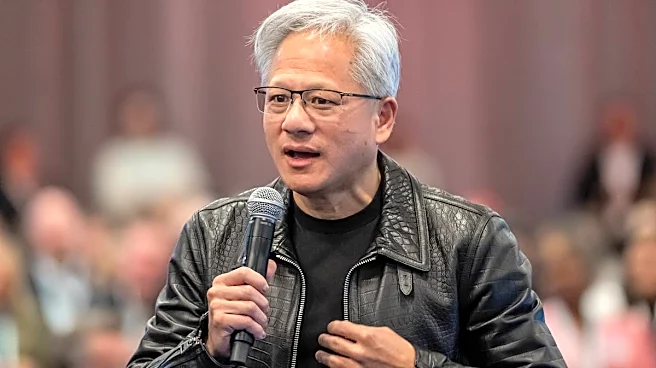
Jensen Huang: The Long-Term Visionary
A key part of Watson’s legacy was his willingness to make massive, long-term investments in research and development, betting on technologies that would pay off years down the road. Nvidia CEO Jensen Huang is arguably the most successful modern practitioner of this high-stakes, long-range vision. For years, Huang poured resources into developing GPUs for applications beyond gaming, particularly in artificial intelligence, long before AI became a dominant technological force. This unwavering focus on the future, often in the face of market skepticism, is a hallmark of Watson-style leadership. Huang's strategy involves identifying and investing in what he calls “zero-billion-dollar markets”—emerging fields with immense future potential. Just as Watson steered IBM to dominate the information age by betting on nascent computing technologies, Huang has positioned Nvidia at the center of the AI revolution by consistently prioritizing long-term R&D over short-term results.