





You’ve seen Keychron keyboards dominate 'best of' lists for years. They offer great features for the price, becoming the default starter board. So why do enthusiasts often prefer alternatives with nearly identical spec sheets? It's complicated.
The Feel Goes Beyond the Switch
The first
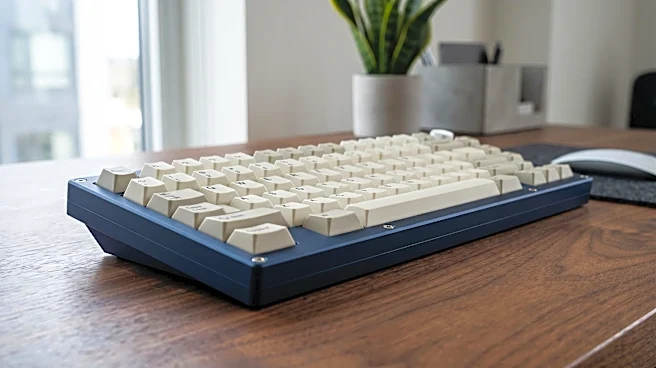
thing a spec sheet tells you is the switch type—linear, tactile, or clicky. But the switch is only one part of the typing equation. The real magic, or lack thereof, comes from the keyboard’s construction. Many budget-friendly boards, including some Keychron models, use a 'tray mount' design, where the main circuit board (PCB) is screwed directly into the plastic or metal case. This is cost-effective but creates a stiff, sometimes inconsistent typing feel. In contrast, many alternatives from brands like NuPhy and Lofree now use a 'gasket mount'. Here, the plate holding the switches is suspended between soft gaskets, isolating it from the case. This creates a softer, bouncier, and more cushioned typing sensation that reduces finger fatigue and feels more premium, a detail no spec sheet can properly convey.
It's All About the Acoustics
A keyboard's sound profile is a huge part of the user experience. A basic tray-mount board can often sound hollow or 'pingy' as vibrations from each keystroke travel directly into the rigid case. Enthusiasts chase a deeper, cleaner sound often described as 'thock'. Achieving this isn't about the switch alone; it's about case materials, internal space, and sound-dampening foam. Competitors are increasingly shipping keyboards with multiple layers of foam pre-installed—between the plate and PCB, and below the PCB—to eliminate unwanted hollowness. While Keychron offers a great platform for DIY modders to add these things themselves, brands like Royal Kludge are building a reputation for delivering a better out-of-the-box sound at a competitive price.
The Out-of-the-Box Finish
Many Keychron boards are fantastic foundations for customization. However, alternatives are increasingly winning over users by offering a more 'finished' experience from the moment you open the box. A key factor is lubrication. Many competitors now sell their keyboards with factory-lubed switches and stabilizers. Lubricant applied to the switch's internal components reduces friction, making key presses smoother and eliminating scratchy sounds. Similarly, lubed stabilizers prevent the rattling noise often heard on larger keys like the spacebar, shift, and enter keys. While an enthusiast can (and often does) perform these modifications manually, brands like Royal Kludge and NuPhy are delivering this refined feel without requiring the user to spend hours taking apart their new keyboard.
Software and Design Philosophy
Keychron has heavily embraced open_source QMK/VIA software for key remapping, which is incredibly powerful but can have a steeper learning curve for beginners. Some competitors, like Royal Kludge, offer simpler proprietary software that, while less flexible, is often more intuitive for casual users who just want to set up a few macros or change lighting effects. Furthermore, design has become a major differentiator. While Keychron often leans towards a functional, utilitarian aesthetic, brands like NuPhy and Lofree have built a following based on unique colorways and a more distinct design language. For many users, a keyboard isn't just a tool but a centerpiece of their desk setup, making these aesthetic choices just as important as the technical specifications.