



1. More Addictive Social Media Feeds
The 'For You' pages on apps like TikTok and the Instagram Explore tab feel like they read your mind for a reason. They're powered by complex recommendation algorithms that analyze your behavior—what you watch, like, and share—to predict what you want
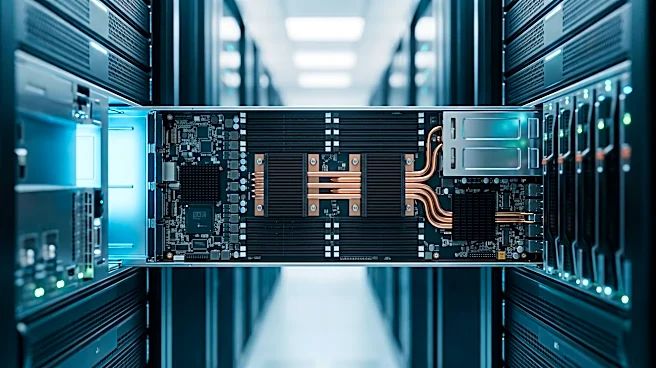
to see next. Training and running these massive AI models requires enormous computational power, a task perfectly suited for the parallel processing capabilities of Nvidia's data center GPUs. The better the chips, the more sophisticated and eerily accurate these feeds become.
2. AI-Powered Photo and Video Magic
Generative AI features are popping up in countless apps, from social media to dedicated photo editors. Think of creating AI profile pictures on TikTok, using AI to generate new backgrounds on Instagram, or transforming text into video. These tasks, especially image and video generation, are incredibly demanding. Advanced GPUs like those in Nvidia's Blackwell series are designed to handle these exact workloads, accelerating the process and making it possible to get high-quality results in seconds, not minutes.
3. Console-Quality Gaming on Your Phone
Ever wonder how your phone can run a graphically intense PC game? The answer is cloud gaming services like Nvidia's own GeForce NOW. Instead of running on your device, the game runs on powerful servers packed with high-end GPUs in a data center. The gameplay is then streamed to your phone as video. This process relies on powerful hardware to render the game and encode the video stream with minimal lag, turning any compatible smartphone or tablet into a high-performance gaming rig.
4. Smarter, More Human-Like Chatbots
The chatbots and digital assistants you interact with for customer service or in apps like Snapchat's 'My AI' are becoming remarkably conversational. This is thanks to the rise of large language models (LLMs). Training these trillion-parameter models is a monumental task that requires thousands of GPUs working together for weeks. Even running the model to generate a response—a process called inference—needs significant power. Nvidia's hardware and software platforms are central to both training and deploying these increasingly helpful AI assistants.
5. Shopping Recommendations That Just 'Get' You
E-commerce apps are constantly trying to show you products you're likely to buy. AI recommendation systems analyze your browsing history, past purchases, and the behavior of similar shoppers to create personalized suggestions. This is a classic AI workload that benefits from GPU acceleration. The more data that can be processed in real-time, the more relevant the recommendations become, moving beyond simple suggestions to predicting your needs before you even search.
6. Real-Time Language Translation
Apps that can translate a spoken conversation or the text in an image in near-real-time are powered by AI. Natural Language Processing (NLP) models, a key part of this technology, require powerful hardware to understand context, grammar, and sentiment quickly and accurately. As AI chips become more efficient, the quality and speed of these translation services improve, breaking down language barriers in everything from travel apps to international business communications.
7. Safer Online Spaces Through AI Moderation
Social media platforms face the immense challenge of filtering out harmful content from billions of daily posts. AI has become an essential tool, automatically scanning text, images, and videos to detect hate speech, misinformation, and other violations. This happens at a scale and speed impossible for human moderators alone. Computer vision and NLP models run on hardware like Nvidia's GPUs to analyze content in real-time, helping to make online communities safer for everyone.