






The Password Problem We All Know
Let's be honest: passwords are a pain. They need to be long, complex, and unique for every single account to be secure. The result? We either forget them, write them on sticky notes, or, more often, reuse the same few easy-to-remember (and easy-to-steal)
passwords everywhere. This single point of failure is behind the vast majority of data breaches and account takeovers. Even with multi-factor authentication (MFA), which adds a layer of security, the underlying password can still be a weak link, vulnerable to sophisticated phishing attacks that trick you into giving it away. Stolen and reused credentials remain one of the most common ways attackers gain access to sensitive information, making the password itself the problem to be solved.
So, What Exactly Is a Passkey?
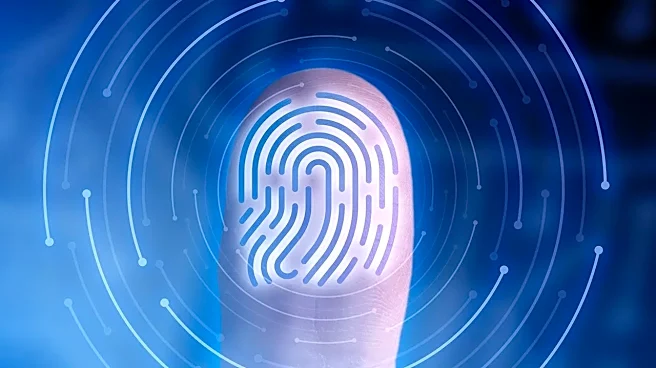
A passkey isn't something you type; it's something you have. Think of it as a digital key that lives securely on your device—your phone, laptop, or tablet. Instead of a secret you have to remember (a password), a passkey uses your device's built-in security, like Face ID, a fingerprint scan, or even your screen-unlock PIN, to prove it's you. This approach combines something you have (your device) with something you are (your biometric data) or something you know (your PIN) for a much stronger form of authentication. Because passkeys are generated by your device for each specific website or app, they are automatically strong and unique every time, eliminating the risks of weak or reused credentials.
The Technical Magic (in Plain English)
The security of passkeys comes from a clever method called public-key cryptography. When you create a passkey for a website, your device generates a pair of mathematically linked keys: a private key and a public key. The public key is sent to the website's server—it's not a secret and is safe to store there. The private key, however, never leaves your device. When you log in, the website sends a challenge to your device. Your device uses the private key to sign this challenge and sends the proof back. The server verifies this signature using your public key, and you're in. The crucial part is that the private key—the actual secret—is never transmitted over the internet, so it can't be phished or stolen in a server breach.
A United Front from Big Tech
For years, a passwordless future was just a talking point. The game changed when the tech industry’s biggest rivals—Apple, Google, and Microsoft—teamed up through the FIDO Alliance to create a unified standard. This collaboration ensures that passkeys work seamlessly across different devices and platforms. You can create a passkey on your iPhone and use it to log into a service on a Windows PC or an Android tablet. Your passkeys are synced through your cloud account (like iCloud Keychain or Google Password Manager), so they’re available on all your devices. This widespread support from the companies that build our operating systems and browsers is what makes this transition not just possible, but inevitable.
What the Shift Means for You
The change is already happening. Billions of passkeys are in active use worldwide, and awareness is growing rapidly. Major services like Google, Amazon, TikTok, and GitHub have seen dramatic increases in security and user convenience after implementing them. For users, passkeys are not only more secure but also significantly faster, cutting login times from over 30 seconds for password-and-MFA down to just over 8 seconds. You'll increasingly see prompts from apps and websites asking if you want to create and save a passkey. Saying yes is the first step. While passwords won't vanish overnight—many services still need to adopt the technology—the momentum is undeniable. This Cybersecurity Awareness Month, the best action you can take is to start using passkeys whenever they are offered.