



The Old-Timer: FAT32 and the Age of Simplicity
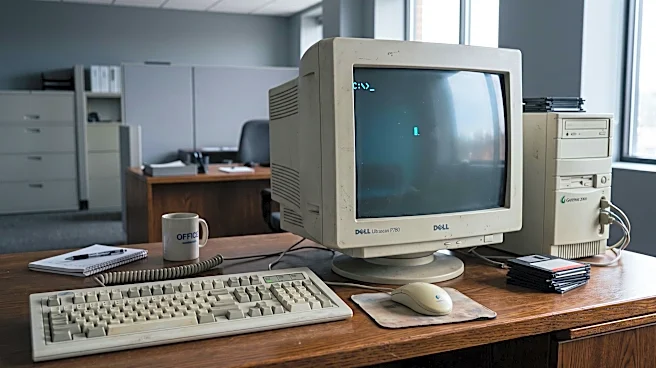
Think of FAT32 (File Allocation Table 32) as the universal translator of the digital world. Introduced with Windows 95, its design philosophy was rooted in a much simpler time. Its primary goal was broad compatibility. The beauty of FAT32 is that nearly
every device, from a Mac to a smart TV to a digital camera, can read and write to it without a second thought. This is why, to this day, most USB flash drives and SD cards come formatted as FAT32 right out of the package. It was an evolution of earlier FAT systems, designed to handle the 'massive' hard drives of the mid-90s, which were beginning to exceed 2 gigabytes. However, FAT32 was built for an era before giant video files and complex security needs. Its most famous limitation is a 4-gigabyte maximum file size, a ceiling that seemed impossibly high in 1996 but is now a common roadblock for anyone working with video or large backups. It also lacks modern features like file permissions and journaling, making it more vulnerable to data corruption and unsuitable for storing a secure operating system.
The Corporate Powerhouse: NTFS and the Demand for Security
If FAT32 is the friendly translator, NTFS (New Technology File System) is the armored security vehicle. Developed by Microsoft and released in 1993 with Windows NT, its design was a direct response to the shortcomings of FAT. Windows NT was built for business and server environments, and it needed a file system to match. The core reasons for its design were reliability and security. Unlike FAT32, NTFS introduced a journaling feature. This works like a logbook, tracking changes before they're made. If your computer crashes mid-save, the journal allows the system to recover without corrupting the entire file system, a crucial feature for mission-critical data. The other pillar of NTFS is security. It was built from the ground up with access control in mind, allowing administrators to set granular permissions for different users and groups on individual files and folders. This meant that on a shared office computer, a regular user couldn't accidentally delete a vital system file. It also brought support for huge files and drives, file compression, and encryption, making it the clear choice for running a modern, multi-user operating system like Windows.
The Open-Source Workhorse: ext4 and the Spirit of Linux
While Microsoft was building its proprietary systems, the Linux community was forging its own path. The 'ext' family of file systems, short for 'Extended File System', began in 1992 to overcome the limits of the MINIX file system used in early Linux. The modern version, ext4 (Fourth Extended Filesystem), became stable around 2008 and is the default for most Linux distributions today. The design philosophy behind ext4 is a blend of performance, stability, and scalability, tailored for the diverse needs of the Linux world—from tiny Raspberry Pi projects to massive web servers. It built upon its predecessor, ext3, by introducing features for better performance and handling massive files. One key innovation is 'extents', a method of tracking contiguous blocks of data that makes reading and writing large files much faster and reduces fragmentation. Another is 'delayed allocation', where the system waits to write data until it has a better picture of the file's size, helping to organize it more efficiently on the disk. Like NTFS, ext4 uses journaling to protect against data corruption from crashes. Its ability to handle enormous volumes (up to 1 exabyte) and a vast number of files makes it a rock-solid foundation for the servers that power much of the internet.
Different Tools for Different Jobs
The reason these three file systems coexist is that they were each designed to be the best solution for a specific problem. FAT32 was designed for universal, simple access in an era of small files and trusted users. Its lack of features became a feature itself: simplicity. NTFS was engineered for a world of corporate networks, where security, user permissions, and recovering from crashes were paramount. It prioritized robustness over universal compatibility. And ext4 was created for the flexible, high-performance, and open-source environment of Linux, scaling from personal desktops to enterprise servers. You can't just pick one 'best' file system without knowing the job. Your Windows PC needs the security of NTFS. Your camera's SD card needs the simple compatibility of FAT32. And the web server delivering this article is very likely relying on the stable, high-performance architecture of ext4. Each one is a product of its time, a snapshot of the problems developers were trying to solve.